While You Argue With ChatGPT, Alabama Teens Are Making $40/Hr Welding
Here's the 2026 jobs landscape in a nutshell: OpenAI is reportedly prepping an IPO that'll test whether investors will tolerate the AI industry's cash bonfire, Microsoft's own internal reports now admit that using AI is often more expensive than just paying humans, and some random Alabama high schoolers are out here pulling $40 an hour turning wrenches on Toyota production lines that no algorithm can touch.
Let that marinate.
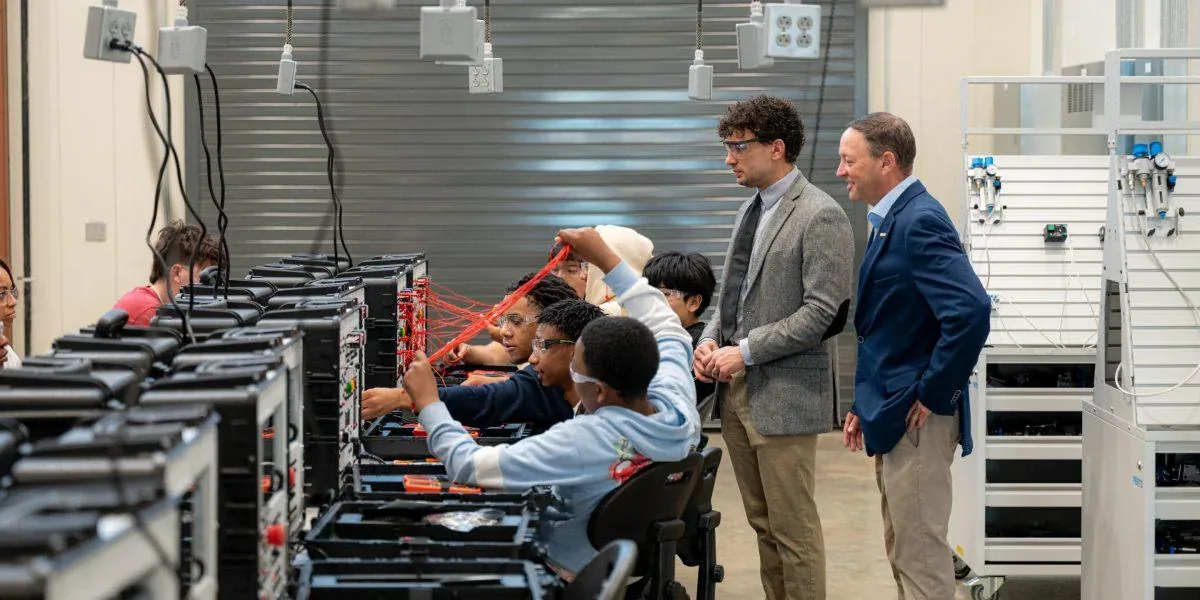
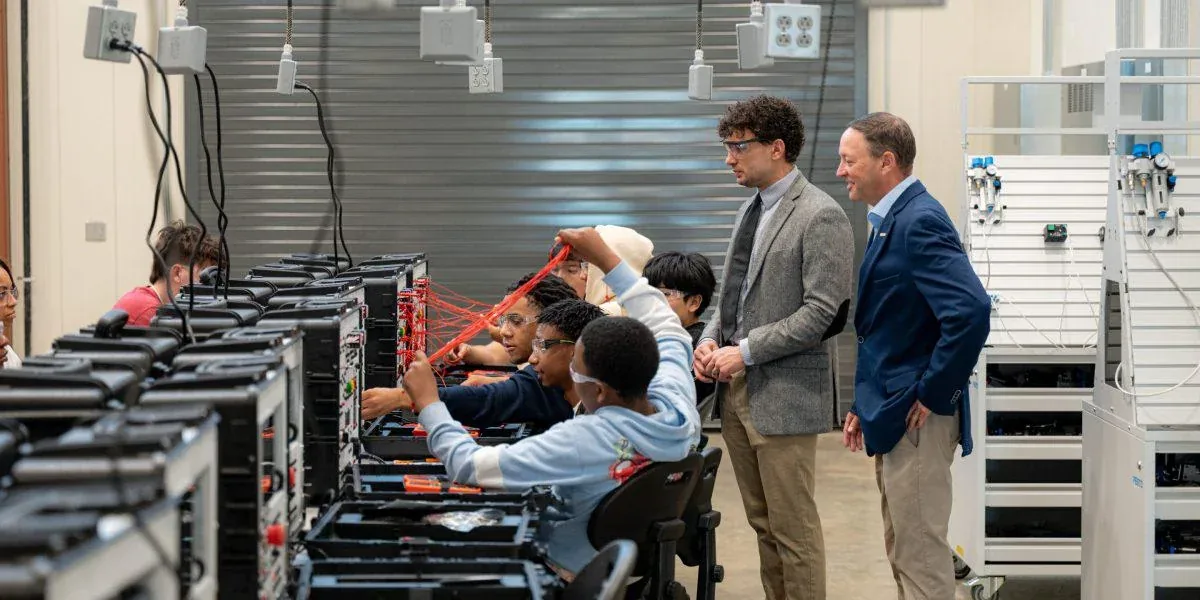
The Fortune piece dropped this week about Huntsville, Alabama — a city that's quietly becoming a manufacturing powerhouse — where a public high school partnered with Toyota to train students in skilled trades. We're talking CNC machining, industrial maintenance, robotics repair. The starting pay: $35-40 per hour with benefits, straight out of high school, zero student debt. And the kicker? These jobs literally cannot be automated because they're the jobs that fix the automation.
Meanwhile, Sheryl Sandberg — remember her? — is out here telling Gen Z the 10-year career plan is "dead" thanks to AI. "Don't script your career when the future is uncertain," says the woman whose entire career was scripted around exploiting personal data and then writing a corporate self-help book. Solid advice from someone who peaked at Facebook in 2012.
The irony cuts deep enough to require safety gloves.
The Numbers Don't Lie (But AI Companies Do)
Let's stack the narratives side by side:
OpenAI, Anthropic, Google DeepMind — they've collectively burned through tens of billions in venture capital with the promise that AI would replace knowledge workers. The pitch deck said: "Why hire a copywriter when GPT-5 can hallucinate brand copy for pennies?" Investors bought it hook, line, and sinker. Now Microsoft's own data shows that AI-assisted tasks often cost more than human labor. Tokens aren't cheap. Agents burn compute like a '67 Mustang burns oil. The unit economics make Uber's early losses look like a lemonade stand.
Meanwhile, an 18-year-old in Huntsville who learned to troubleshoot a robotic welding arm is pulling $83,000 a year with overtime, full medical, and a 401k match. No venture capital. No series A. No pivot to enterprise SaaS. Just a torque wrench and job security that'd make a tenured professor jealous.
The AI "godfather" who spoke to Fortune this week — calling CEOs who hype job losses "extremely destructive" — isn't wrong. The panic selling of white-collar obsolescence is a self-fulfilling prophecy. Companies aren't replacing workers with AI because the AI is good enough. They're replacing workers because the narrative says they should. And your kids are the ones paying the price.
Toyota's Counter-Intuitive Masterstroke
Toyota didn't stumble into this. Their Huntsville engine plant has been operational since 2003, and they've watched the talent pipeline dry up as every guidance counselor in America pushed kids toward computer science degrees. The result? A generation of CS grads competing with GPT-4 for entry-level coding gigs while journeyman electricians can name their price.
The Alabama program isn't charity — it's a survival strategy. Toyota needs humans who can maintain the $50 million production lines. The robots break. The sensors fail. The PLCs glitch out. And when the line stops, it costs $10,000 per minute. You think GPT-5 is crawling into a machine housing with a multimeter? Please. It can't even generate a JPEG with the right number of fingers.
This is the part the tech press keeps missing. The future isn't humans versus machines. It's humans who understand machines. And that's always been the case.
The Great AI Backlash Has Arrived
The Wall Street Journal reports the "American rebellion against AI is gaining steam." Commencement speakers getting booed. Data centers blocked. Poll numbers for AI companies tanking. Pope Leo dropped an encyclical warning about "opaque algorithms" controlled by a "few" companies bringing "new forms of dehumanisation." When the Pope is calling out your tech stack, you might have a branding problem.
Steve Wozniak — the guy who actually built Apple's first computers while Jobs was busy being a visionary — told students at a graduation speech that they "all have AI — actual intelligence." The crowd cheered. Not because it was profound. Because it was a relief. Someone finally gave them permission to believe they weren't obsolete.
The rebellion isn't anti-technology. It's anti-hype. People are exhausted by the gap between what AI companies promise and what they deliver. Sora still can't generate a coherent 30-second clip without physics violations. Claude will apologize for things it didn't do wrong. Gemini suggests you glue cheese to your pizza. These aren't the droids we were looking for.
The Real Flex? Physical Competence
Here's what the skilled-trades-as-AI-hedge narrative gets right: the physical world has a moat. You can't API a plumbing problem. You can't fine-tune a model to rewire a breaker box remotely. The embodied, tactile, messy reality of industrial work resists digitization in ways that copywriting and basic code monkey tasks simply don't.
Baidu's robotaxis are already stressing out Chinese gig workers — that's real displacement happening in real time. But autonomous driving is a constrained problem with massive funding and clear deployment paths. Replacing an HVAC technician who needs to crawl through an attic and diagnose a failing compressor? That's a robotics problem that's decades away, if it ever arrives.
The Alabama kids get this intuitively. They're not anti-AI. They're learning to maintain the robots. They're the mechanic to the machine, not the replaced worker. It's a distinction that matters.
The Market's Waking Up
Nvidia's racing to consolidate its AI chip dominance — the "Super Bowl of AI" as Fortune called it — because they know the window might close. OpenAI's potential IPO later this year will test whether public market investors have the stomach for a company that's never turned a profit and whose core product keeps getting cheaper to replicate.
The smart money isn't betting against AI. It's betting around AI. The picks-and-shovels play. The infrastructure. The humans who keep the whole thing running when the servers go down.
So yeah. Go ahead and learn to prompt engineer. I'm sure it'll be relevant for another 18 months before the models learn to prompt themselves. Or you could learn to weld. Your call.
Just don't say nobody warned you.