ChatGPT Was Caught Snooping—And Nobody's Shocked
Look, we all knew the deal when we invited ChatGPT onto our machines. It's like letting a super-chatty roommate crash on your couch—convenient, sure, but you know they're going through your fridge at 2 AM. Only this roommate has 1.76 trillion parameters and a voracious appetite for every scrap of data it can slurp up.
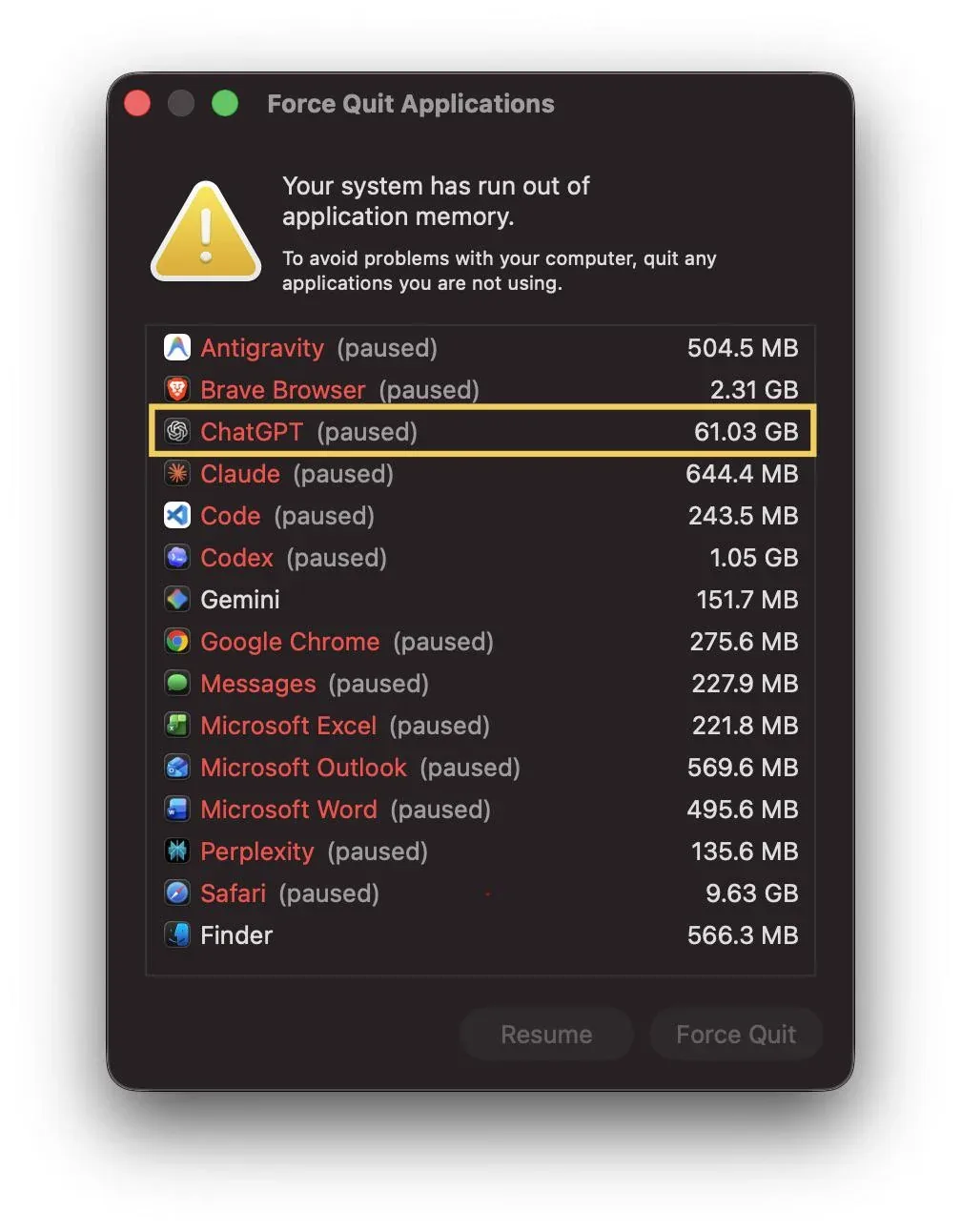
A Reddit post recently blew up asking the question that should've been on everyone's lips since November 30, 2022: "What was ChatGPT secretly doing on my computer?" The screenshot showed something that made privacy advocates' spines tingle and everyone else shrug with that familiar nihilistic resignation we've perfected in the surveillance age.
Here's the thing about OpenAI—they built their empire on the promise of transparency. The company name literally has "Open" in it. That's like naming your restaurant "Honest Joe's Not-Poison Diner." The branding writes its own punchlines.
Since GPT-4's launch on March 14, 2023, OpenAI has been playing a curious game of peekaboo with user data. You've got the desktop app silently running. The Chrome extension integrated into everything. The ChatGPT macOS app that dropped in May 2024, giving it direct access to your screen, your files, your digital life. Each iteration getting more embedded, more omnipresent, more... watchful.
And what exactly is it watching? That's the million-token question.
Remember when ChatGPT's "Memory" feature rolled out and everyone thought it was cute that it remembered your dog's name? Yeah, that wasn't just party trivia. The system was building comprehensive user profiles, tracking conversation patterns, learning your workflows, your habits, your 3 AM existential crises when you ask it whether AI will replace your job. (It will. Sorry.)
The Reddit thread erupted with theories. Some users found persistent background processes even after closing the app. Others noticed unusual network activity. A few paranoid (or perhaps prescient) souls pointed to the Wayback Machine captures showing OpenAI's privacy policy had been quietly edited seventeen times since launch—each revision slightly broader in scope.
This hits different in 2026. We're in the middle of what the Wall Street Journal dubbed "The American Rebellion Against AI." AI companies are getting booed at graduation speeches. Communities are blocking data center construction. Poll numbers for AI sentiment are in the toilet. Erin Brockovich just launched a map tracking over 4,200 data centers across the US, asking communities to report environmental and privacy impacts.
The Pope literally issued an encyclical warning about "opaque algorithms" controlled by a "few companies" bringing "new forms of dehumanisation." When the Pontiff is dropping diss tracks on your data practices, you've officially peaked as a villain.
Meanwhile, DuckDuckGo installs are up 30% because people are rejecting Google force-feeding them AI search results. Microsoft's own reports are showing that using AI is more expensive than paying human employees. Tech layoffs have passed 100,000 in 2026 alone—all to fund the AI gold rush that's hemorrhaging money while vacuuming up every byte of personal data it can find.
The math is simple: these companies need your data to train their next model. GPT-5 rumors are swirling about a 100 trillion parameter beast that'll cost upwards of $10 billion to train. That training data has to come from somewhere. And what's more convenient than the millions of desktops already running your software?
Apple cofounder Steve Wozniak recently told students they "all have AI — actual intelligence." The crowd cheered. It was a subtle burn—the kind that hits harder because it's true. Human intelligence doesn't secretly mine your browsing history to improve its quarterly metrics.
OpenAI's response to these privacy concerns has been their usual playbook: dismiss, deflect, delay, and if all else fails, release a shiny new feature to distract everyone. "Look, ChatGPT can generate video now! Don't worry about what it's doing in the background!"
The structural problem is that we've built an entire economy around free services that aren't free at all. You're paying with your data, your attention, your digital soul. ChatGPT's desktop app isn't a helpful assistant—it's a data extraction tool wearing a friendly chatbot costume.
Sheryl Sandberg, in her infinite wisdom, recently told Gen Z that the 10-year career plan is dead thanks to AI. What she didn't mention is that the replacement plan involves feeding every moment of your professional existence into a training pipeline for systems that will eventually render you obsolete.
So what was ChatGPT secretly doing on your computer? Everything it could get away with. And we let it because the alternative—learning to think for ourselves again—sounded like too much work.
Welcome to the future. It's watching you back.