SoftBank's Out: Hyundai Owns All the Robot Dogs
Boston Dynamics has been passed around more times than a bootleg Maxtape at a Fulton Street flea market. MIT spinoff (1992) → Google (2013) → SoftBank (2017) → Hyundai takes 80% (2020) → and now Hyundai's buying the remaining stake from SoftBank for $325 million. Full ownership. No more timeshare. Spot the robot dog finally has one landlord instead of three confused ones arguing over the lease.
Four owners in 32 years. Your boy has commitment issues.
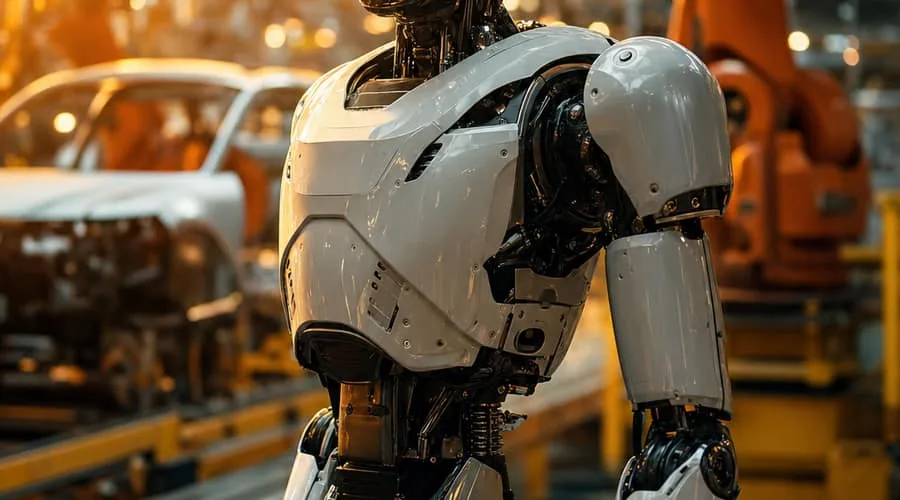
The Ownership Mixtape: Every Track Skip
Here's the full saga for those keeping score at home:
- 1992: Marc Raibert spins BD out of MIT's Leg Lab. The team builds BigDog—a gas-powered quadruped that sounded like a lawnmower having a panic attack in a hurricane. DARPA threw money at it. The YouTube compilations hit different in 2008.
- 2013: Google/Alphabet acquires BD for an undisclosed sum (reported ~$500M). Andy Rubin's robotics moonshot. Rubin exits Google eight months later. Alphabet realizes robots don't have a search box and can't serve ads. Starts quietly shopping BD around like a regrettable Craigslist post.
- 2017: SoftBank's Masayoshi Son swoops in. Reported price: ~$1B. Son, who also bought ARM and Sprint around the same era, thinks robots are the future. He's directionally correct but his timing is always a decade early and leveraged to the gills.
- December 2020: Hyundai Motor Group—Hyundai Motor, Kia, Hyundai Mobis—acquires 80% for $880M, valuing BD at $1.1B. SoftBank keeps ~20%.
- Now: Hyundai buys SoftBank's remaining ~20% for $325M. Total implication: BD valued around $1.6B. Full control. Done. SoftBank exits with a respectable return and moves on to dumping more capital into WeWork's corpse.
The all-in price for Hyundai? Roughly $1.2B for 100% of the company that literally defines 'robot dog' in the global consciousness. For context, that's less than what Figure AI raised in a single round in February 2024 ($675M at a $2.6B valuation). It's less than a third of what Rivian burned through in one quarter. For the O.G. of modern robotics, that number feels suspiciously reasonable.
The Robot Roster
Boston Dynamics isn't just a YouTube channel with legs. The product lineup:
- Spot — the quadruped. Commercially available since 2019. Price: $74,500 base. Deployed across 50+ countries. BP uses Spots on offshore oil rigs. SpaceX uses them at Boca Chica. Ford has them in plants. Singapore deployed Spot for pandemic patrol in public parks (peak dystopia, 2020 edition). Thousands of units shipped.
- Atlas — the humanoid. The original hydraulic Atlas was retired in April 2024 with a cinematic goodbye video. Days later, the new all-electric Atlas dropped. BD claims it's their most dynamic humanoid yet—28 joints, custom linear actuators, sub-2mm positioning precision. No price, no ship date. Classic BD.
- Stretch — the autonomous warehouse mobile manipulator. Commercially launched 2022-2023. Unloads trucks, moves cases, handles depalletizing. DHL, Madison Industries, and GAP are early customers. This is the revenue play nobody talks about because it's not as photogenic as a backflipping robot.
The commercial pivot matters. For 25 years, BD was a DARPA-funded research lab making content for engineering students' group chats. Now Spot generates hardware revenue. Stretch has enterprise contracts. The company reportedly explored an IPO in 2022 before the market cratered. They're closer to a real business than ever.
Why Hyundai Actually Wants This
Executive Chair Euisun Chung has repositioned Hyundai Motor Group around 'mobility solutions'—robots, urban air mobility (Supernal eVTOL by 2028), autonomous driving, and software-defined EVs. BD fits the thesis: 'everything that moves, we build it.'
Specific industrial logic:
- Manufacturing integration: Spot for factory inspection. Stretch for logistics. Atlas eventually for assembly tasks. Hyundai runs massive plants globally—this is vertical integration at the physical layer.
- Battery and powertrain overlap: BD's mobile robot power systems share DNA with EV battery tech. Hyundai's E-GMP platform, battery management, and motor expertise directly transfer.
- Perception and autonomy: BD's computer vision, SLAM, and navigation stack is genuinely world-class. That IP feeds directly into Hyundai's autonomous driving programs.
- Brand halo: Owning BD makes Hyundai look like a deep-tech player, not just the company that makes the Ioniq 5 and Tucson. The coolest robotics company on Earth is now a Korean automaker's subsidiary. That reframing is worth something.
The $325M for SoftBank's remaining 20% is pocket change against Hyundai Motor Group's ~$130B+ in 2023 revenue. This is a rounding error on their balance sheet.
The Hype Context: Humanoid Robots Are 2024's Crypto
The humanoid robot space is molten right now:
- Figure AI: $675M raise at $2.6B valuation (Feb 2024). Backers: OpenAI, Microsoft, NVIDIA, Jeff Bezos. Zero commercial revenue. Valuation: 2.4x BD's implied current value.
- Tesla Optimus: Musk promises a $20-30K humanoid eventually. He showed a prototype walking in 2022 that was a guy in a suit. Then a real one in 2023. Production timeline: classic Musk—'two years away' forever.
- 1X Technologies: $100M for NEO, the home humanoid. Backed by OpenAI.
- Apptronik: Partnered with Mercedes-Benz for factory deployment of Apollo humanoid.
- Agility Robotics: Digit humanoid already deployed in Amazon and GXO warehouses.
Boston Dynamics built humanoids before most of these companies existed. They competed in the 2013 DARPA Robotics Challenge. They have 30+ years of locomotion data, control systems, and hardware iterations. And somehow, they're not the hottest name in the category. Figure has more hype. Tesla has more media oxygen. Agility has more warehouse deployments.
BD has something the others mostly don't: shipped products that generate revenue.
The Opinionated Take
Hyundai buying 100% of Boston Dynamics is either the savviest industrial acquisition of the decade or the most expensive YouTube channel purchase in human history.
The bull case: BD has real products, real customers, real revenue growth. Spot is deployed commercially and generating hardware + software subscription income. Stretch is entering a warehouse automation market projected to hit $50B+ by 2030. The new electric Atlas has genuine manufacturing applications if they can get the cost down. Hyundai has manufacturing scale, industrial use cases, and capital patience that Google and SoftBank lacked. At ~$1.2B all-in, this is a steal next to Figure's $2.6B paper valuation for a pre-revenue company.
The bear case: BD has never been profitable. Not under MIT. Not under Google. Not under SoftBank. Twenty-five years of burning capital. The robots are expensive ($74.5K for Spot), niche, and face increasing competition from cheaper Chinese alternatives. The humanoid hype cycle will eventually crash like every other tech cycle. And Hyundai—a company whose brand is value vehicles—may not have the institutional patience for a 10-year robotics profitability runway.
My read: Stretch is the sleeper. Warehouse automation has clear ROI, repeatable deployment, and massive TAM. If Hyundai pushes Stretch into every major logistics player globally, BD turns profitable within 3 years. Spot stays a premium industrial tool—useful but niche. Atlas is the moonshot that keeps the brand hot but won't generate meaningful revenue this decade.
The real question isn't whether Hyundai can make BD profitable. It's whether they'll stay interested long enough to find out. Google bailed after four years. SoftBank bailed after three. Hyundai's now four years in and doubling down. That's either conviction or sunk-cost escalation.
For now, Boston Dynamics finally has a single owner with industrial logic, deep pockets, and a reason to care. Spot might actually have a forever home. Until the next restructuring, anyway.