Llama 3.1 Memorized 42% of Harry Potter and That Should Terrify You
Something's rotten in the open-weights kingdom, and it smells like Butterbeer and copyright infringement.
Researchers just dropped a bomb: Meta's Llama 3.1—the 405-billion-parameter "open source" darling that Zuck launched on July 23, 2024—can regurgitate 42 percent of the first Harry Potter book from memory. Not summarize. Not paraphrase. Reproduce. Word-for-word. Nearly half of Sorcerer's Stone, sitting inside a model that 350,000+ developers have downloaded from Hugging Face.
Let that marinate for a second.
We've spent the last two years watching AI companies play semantic gymnastics around training data. "We use publicly available information," they say. "We respect intellectual property," they promise. Meanwhile, Llama 3.1 is out here functioning like a 405B-parameter bootleg Kindle with a photographic memory and zero shame.
The Numbers Don't Lie (But Meta Might)
The Understanding AI research isn't some fringe hit job. Their methodology was straightforward: prompt the model with passages from the book and measure how much it could auto-complete correctly. We're talking about Harry Potter and the Sorcerer's Stone—roughly 76,000 words. Llama 3.1 can cough up about 32,000 of them with high accuracy.
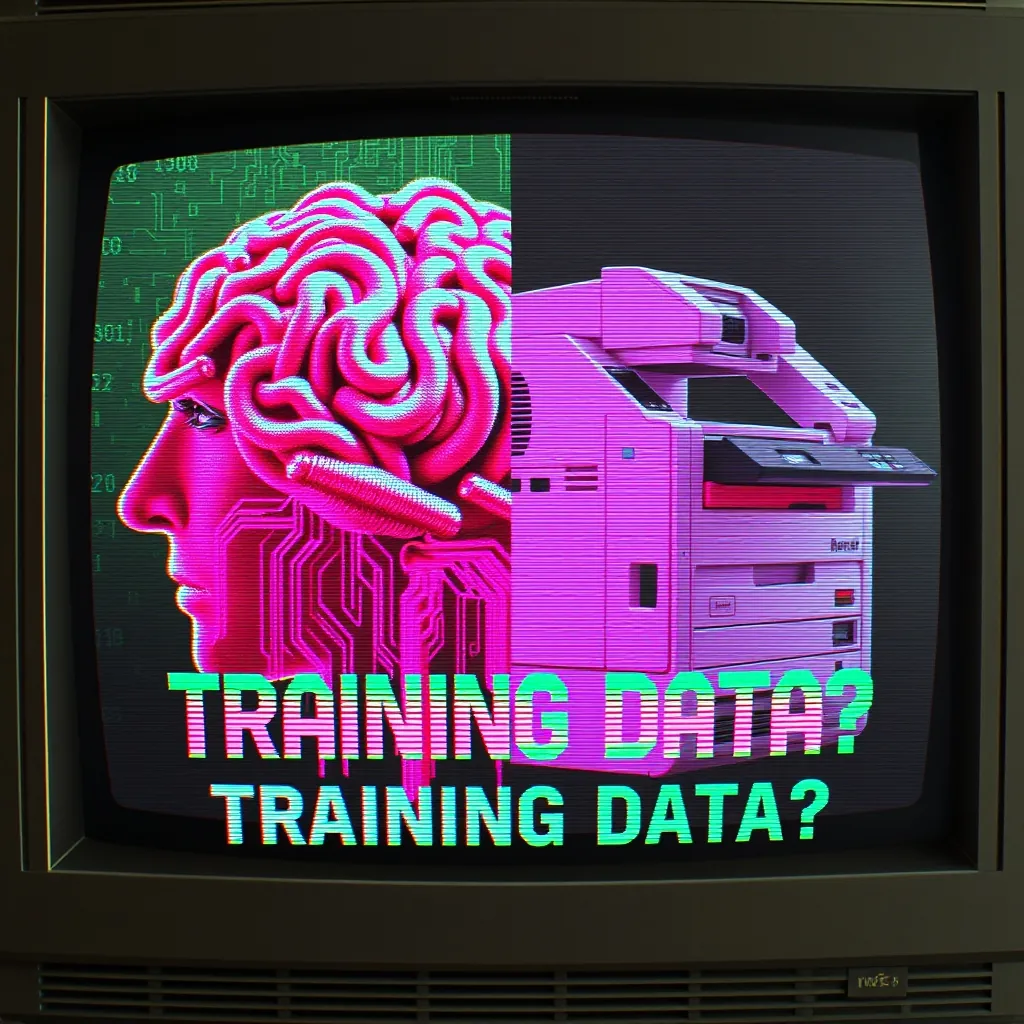
This isn't "learning patterns" or "understanding narrative structure." This is a Xerox machine wearing a neural network costume.
Meta launched Llama 3.1 in three sizes: 8B, 70B, and the flagship 405B. They priced API access through partners like Fireworks AI and Together Computer at competitive rates, undercutting OpenAI's GPT-4o on cost per token. The marketing pitch? "Democratizing AI." The reality? Democratizing other people's copyrighted work, apparently.
And before anyone comes at me with "but it's open source"—no, it's not. It's open weights with a custom license that still restricts usage for companies with 700M+ monthly active users. You can see the parameters. You can't see the recipe. And Meta definitely doesn't want you asking too many questions about the ingredients.
Why Harry Potter Matters More Than You Think
J.K. Rowling's wizard saga is the canary in this particular coal mine for a reason. It's one of the most copyrighted, litigated, and aggressively protected IP properties in modern history. Warner Bros. has sent cease-and-desists over birthday cakes decorated with lightning bolts. The franchise has generated over $34 billion across books, films, merchandise, and theme parks.
If Llama 3.1 memorized this—the most legally radioactive text they could've chosen—imagine what else is baked in there. Every New York Times bestseller? Every GitHub repository with a restrictive license? Every Substack post from a writer who explicitly opted out of AI training?
The implications aren't theoretical. The New York Times is currently suing OpenAI for exactly this kind of reproduction. Sarah Silverman and other authors filed a class action against Meta and OpenAI last year. And now we have quantifiable proof that these models aren't just "inspired by" their training data—they're containing it.
The Hype Machine Keeps Spinning
Meanwhile, the AI influencer industrial complex keeps churning out hot takes about how Llama 3.1 "closes the gap" with GPT-4. TechCrunch called it "Meta's most capable model yet." The Verge ran with "Meta's Llama 3.1 405B is here to take on OpenAI and Google." Everyone's obsessed with benchmark scores and leaderboard rankings.
Cool. Great. How about we talk about the fact that the model they're hyping is essentially a massive copyright violation with a nice API wrapper?
This is the same pattern we see across the hype economy. Remember when NFT projects were just "celebrating digital art" until everyone realized it was screenshot laundering? When crypto exchanges promised "financial freedom" right before imploding? The AI industry has its own version of this grift: wrap something legally questionable in technomystical language, call it "emergent capability," and hope nobody reads the fine print.
What Should Actually Happen (But Won't)
Opt-out mechanisms are a joke. Licenses get ignored. And the AI companies know that by the time regulators catch up, the models will already be deployed across millions of applications.
Here's what a genuinely accountable ecosystem would look like:
- Training data transparency: Not a vague blog post. Actual documentation of what went in.
- Auditable memorization filters: If your model can reproduce 42% of a copyrighted book, you failed at basic data hygiene.
- Compensation frameworks: If you trained on my work, I get paid. Period. Not a "creator fund" with a $500 cap.
But none of this will happen because the entire AI economy is built on the assumption that intellectual property is a suggestion, not a law. Meta's response to the memorization research will probably be some variant of "we take IP seriously and are committed to working with stakeholders"—the same meaningless paragraph every tech company deploys when they get caught.
The Bottom Line
Llama 3.1 isn't just a model. It's a mirror. It reflects exactly what the AI industry has become: a machine that takes what it wants, packages it as innovation, and dares you to stop it.
42 percent of Harry Potter. In an "open" model downloaded hundreds of thousands of times. With no way to verify what else is in there.
The hype cycle demands we focus on what AI can do. Maybe we should start asking what it shouldn't have done in the first place.
Because if Zuck's poster child can cough up half a Harry Potter book from memory, the real question isn't whether AI is getting smarter—it's whether any of this was ever legal.
hype404 is a 90s-street-culture blog covering AI, hype brands, and tech that overpromised. We don't do puff pieces.