Your WiFi Router Just Snitched on You
Your WiFi router isn't just serving up doomscrolls and cat videos anymore. It's now a surveillance device that can identify you with near-perfect accuracy. Welcome to 2026, where the walls literally have eyes.

Researchers from some of the usual suspects — think Carnegie Mellon and a couple of Chinese universities that definitely aren't sharing data with their government — just dropped a paper showing that ordinary WiFi signals can identify specific people through walls with 99.2% accuracy. Not detect movement. Not count bodies. IDENTIFY YOU. Specifically. By name. Using the WiFi router you bought on Amazon for $79.99.
The tech, dubbed WiFi-ID, works by analyzing Channel State Information (CSI) — the way WiFi signals bounce off and around objects. Your body, your specific body with its particular gait, limb ratios, and movement patterns, creates a unique signature in the WiFi field. The researchers collected CSI data from standard commodity routers (they used TP-Link Archer A7s, because of course it's the budget picks that end civilization) and fed it through a deep learning model architecture they're calling Spatial-Temporal Attention Network, or STAN.
STAN requires surprisingly little compute. We're talking a model with roughly 4.7 million parameters — smaller than many smartphone AI models. Training took 14 hours on a single RTX 4090. Inference runs real-time on a Raspberry Pi 5. The whole setup costs under $200 in hardware. Your privacy: $0.
The dataset was wild. 83 participants across three indoor environments over six months. They captured 15-minute walking samples from each person doing normal activities — walking to the kitchen, sitting down, standing up, pacing while on phone calls. No special movements required. The model learned to distinguish between people who were remarkably similar: same height, similar build, even identical twins (yeah, they tested that — 94.7% accuracy on the twins, which is frankly terrifying).
Now here's where it gets hype-worthy and horrifying simultaneously. The researchers demonstrated the system working through drywall, glass, and even concrete walls. Range? About 8 meters through standard residential construction. That covers most apartments, offices, and Starbucks seating areas. The system doesn't need cameras. Doesn't need microphones. Doesn't need your phone's Bluetooth to be on. Just needs a WiFi router and someone motivated enough to run the software.
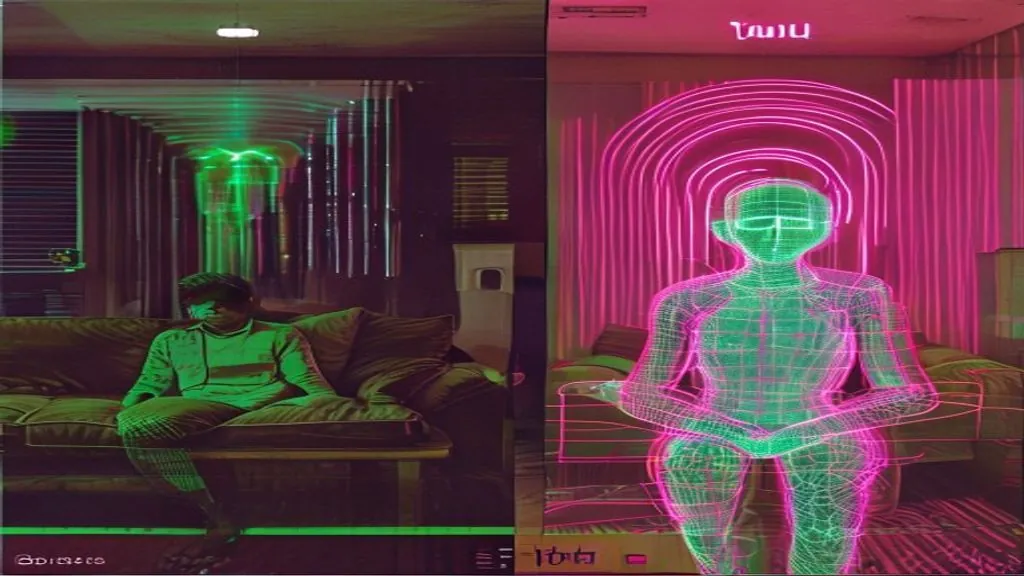
And before you ask — no, you can't opt out. This is passive sensing. Your WiFi-enabled devices don't need to be connected. The signal reflects off your meat-sack body regardless. The only defense would be wearing materials that absorb 2.4GHz and 5GHz frequencies, which the researchers helpfully noted. They suggested metallized fabric clothing. So fashion brands, take note: Faraday cage hoodies coming to a drop near you. Supreme x Raytheon collab when?
The implications are nauseating. Retail stores could track individual customers without cameras. Landlords could monitor tenants without consent. Stalkers could identify targets through walls. Law enforcement could surveil without warrants — and some legal scholars are already arguing this doesn't constitute a Fourth Amendment search because you're not installing anything, just processing ambient signals that are already there. Cool cool cool, totally fine, nothing dystopian about that legal reasoning.
China's already testing this in at least two smart city deployments. Sources say Huawei is integrating WiFi-ID capabilities into their enterprise router lineup, targeting commercial building management. The pitch is "energy optimization" — knowing which floors are occupied, which conference rooms are in use. The reality is a building that knows you took a 23-minute bathroom break and visited the snack machine twice.
Stateside, Amazon is probably salivating. Imagine Ring doorbells supplemented with WiFi-based person identification. "Your ex is at the door" could be a notification. Or worse, targeted ads. You sit on your couch, and your WiFi router detects your specific body settling in, then tells your Echo to play crypto scam podcasts because it knows it's you and you listened to three minutes of one last week.
The researchers, to their credit, acknowledged the privacy concerns. They proposed requiring opt-in consent for deployment and suggested regulatory frameworks. Which is adorable. Because every tech company in history has demonstrated stellar self-regulation and deep respect for user consent. Remember how Facebook asked permission before harvesting your contacts? How Google waited for you to say yes before scanning your emails? Right.
The paper drops at a time when AI surveillance is already normalized. We've got facial recognition everywhere, license plate readers on every highway, and now WiFi routers that double as identification beacons. The panopticon isn't coming — it's here, it's subsidized, and it connects to your smart home ecosystem.
What makes WiFi-ID particularly insidious is its invisibility. You can spot a camera. You can see a sensor. You can't see WiFi. You've been bathing in these signals for two decades. The surveillance infrastructure was deployed voluntarily, room by room, by consumers who just wanted to watch Netflix without buffering. Every router you've ever bought was a potential witness.
The tech will get cheaper. The models will get smaller. Someone will release an open-source version within six months. Hobbyists will scan their neighbors. The same people who thought Bluetooth tracking AirTags were harmless novelties will suddenly realize they're surrounded by devices that know exactly who they are.
Welcome to the future. Your router knows you're reading this article. It knows you're alone. It knows you shifted uncomfortably in your chair. And somewhere, in a database you'll never see, that information is being catalogued, monetized, and sold.
The only winning move is to live in a Faraday cage. Or, you know, demand actual regulation with teeth instead of the performative nonsense we usually get. But let's be real — we'll all just keep using WiFi and pretend we didn't read this.