The Ghost in the Server Farm: AI's Infrasound Problem
There's a phantom haunting the AI revolution, and it doesn't show up on any benchmark.
Residents living near data centers — those windowless monuments to our collective decision to let chatbots write our emails — are reporting something weird: a presence. Not a ghost exactly, but a feeling. Headaches that won't quit. Nausea that rolls in like fog. Anxiety with no source. Sleep that feels like it's being stolen, not lost. The kind of symptoms that sound psychosomatic until your neighbor mentions the same thing, and then their neighbor, and then half the damn subdivision.
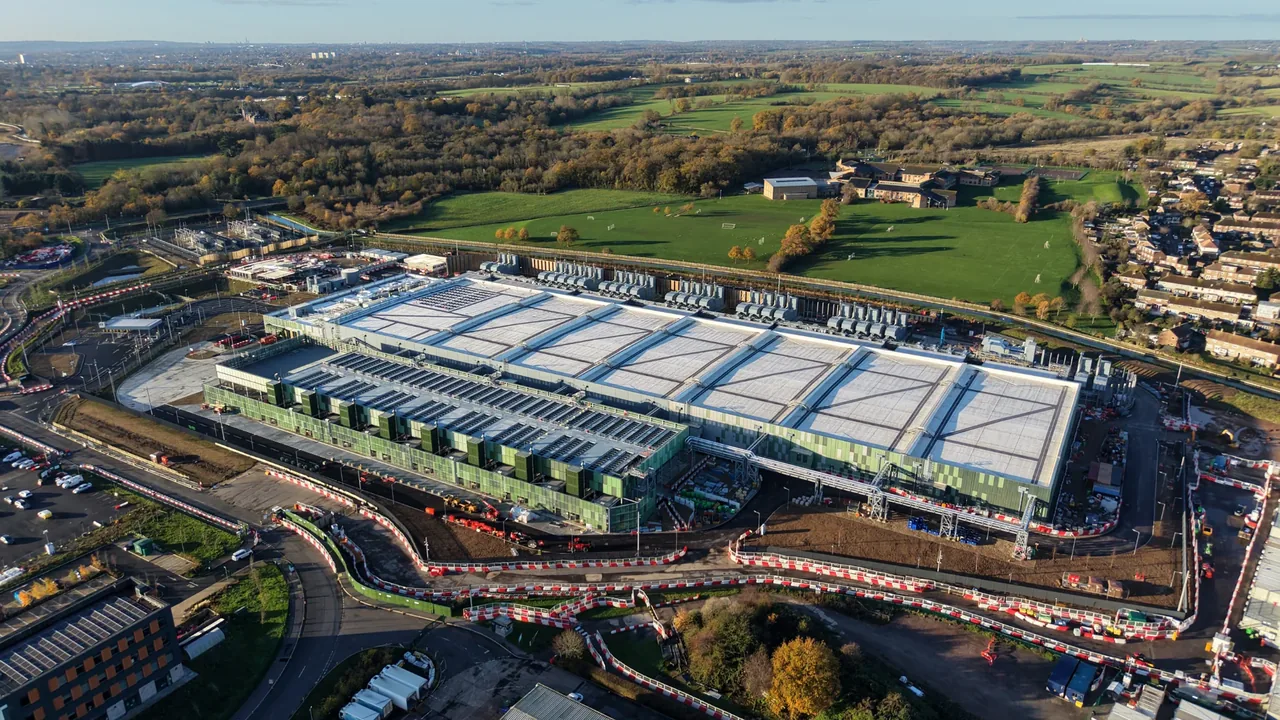
The culprit, according to a growing wave of complaints documented by Tom's Hardware this week, is infrasound — sound waves below 20Hz that your ears can't register but your body absolutely feels. It's the frequency of nightmares, of jet engines, of that one Frequencies festival that left everyone disoriented for days. And it's being generated by the massive cooling systems and power infrastructure that keep AI data centers from melting into slag.
Here's the truly cursed part: standard decibel meters, the kind municipalities use to enforce noise ordinances, can't even detect it. So when residents complain, the companies can point to their readouts and say, "See? Quiet as a library." Technically accurate. Completely dishonest. The platonic ideal of tech industry communication.
The Scale of the Haunting
Let's talk numbers, because this problem is scaling faster than a viral TikTok dance. Microsoft dropped over $50 billion on capital expenditure in fiscal 2025, with a fat chunk of that going to AI infrastructure. Google parent Alphabet committed to $75 billion in capex for 2025 alone. Meta's AI budget could fund a small country's GDP. These aren't data centers anymore — they're data cities, and they're being dropped into communities with all the sensitivity of a sledgehammer at a glassblowing convention.
Each GPU cluster running GPT-4, Claude, Gemini, or whatever model promised to revolutionise your workflow this week requires approximately 7-10 kilowatts of power per rack. The cooling systems needed to prevent thousands of Nvidia H100s ($25,000-$40,000 a pop) from immolating themselves are industrial-scale beasts — chillers, pumps, and fans that would make a submarine crew feel at home. And they hum. They hum at frequencies that bypass your conscious hearing and drill straight into your nervous system.
The Tom's Hardware report notes that complaints are coming from multiple communities near major AI infrastructure deployments. This isn't one bad installation. This is a systemic design flaw being replicated at scale across the globe, because when has the tech industry ever let a little thing like "making humans physically ill" slow down a product launch?
Your ChatGPT Query Has Externalities
Every time you ask ChatGPT to write a polite email declining a meeting, or Claude to summarise a PDF you could've skimmed in two minutes, or Gemini to generate an image of a cat wearing a top hat — somewhere, a cooling fan spins a little faster. Somewhere, the infrasound gets a little louder. Somewhere, someone's kid wakes up with a nosebleed they can't explain.
Okay, that's dramatic. But the principle holds. The AI industry has constructed an enormous externality machine, and it's externalising directly into the bodies of people who had the misfortune of owning homes near where some county board got sweet-talked by a hyperscaler promising jobs.
And let's be real about those jobs. A typical hyperscale data center employs maybe 50-100 permanent workers once construction ends. The community gets: noise they can't measure, water tables getting drained (remember the Georgia data center that sucked down 30 million gallons before anyone noticed?), property values that may or may not tank depending on whether the infrasound issue goes mainstream, and the privilege of powering someone else's generative AI fantasy.
The Measurement Problem
The reason this story hasn't exploded yet — and trust me, it will — is the measurement gap. Standard sound level meters are A-weighted, meaning they filter out low frequencies precisely because humans "can't hear them." It's like measuring air quality with a device that only detects visible smoke. Technically functional, practically useless for the actual problem.
You need specialised equipment — infrasonic microphones, narrowband analysers — to capture what residents are experiencing. Most local governments don't have this gear. Most local governments don't even know it exists. And the data center operators, who absolutely do know, have zero incentive to volunteer that information.
It's the same playbook we've seen with every tech externality from social media addiction to algorithmic bias: deploy first, measure later (or never), and fight regulation with lobbyists and campaign contributions. The AI industry is spending hundreds of billions on infrastructure. You think they're going to let some infrasound complaints slow them down? They'll bury this study faster than Meta buried its own civil rights audit.
What Happens Next
Three scenarios, ranked by likelihood:
Nothing. Residents complain, studies get commissioned, findings are "inconclusive," and the data centers keep humming their sub-20Hz dirge. This is the default outcome for any tech externality that doesn't affect rich people.
Class-action lawsuits. Plaintiffs' attorneys are already circling. If they can establish a causal link between infrasound exposure and health effects — and there's enough peer-reviewed literature to build that case — this could make PFAS litigation look like small claims court.
Regulatory reckoning. Some municipality, somewhere, will update its noise ordinance to include infrasound measurement. The industry will scream about "innovation-killing regulation." They'll threaten to build elsewhere. They'll probably win. But the precedent will be set.
The bitter irony? The same tech companies spending billions on "responsible AI" frameworks and safety committees can't be bothered to buy a $2,000 infrasonic microphone to check if their servers are making the neighbours sick. Responsibility, it turns out, stops at the property line.
The AI revolution was supposed to elevate humanity. Instead, it's literally vibrating us at frequencies we can't consciously perceive. If that's not a metaphor for the entire industry, I don't know what is.
Now if you'll excuse me, I need to ask ChatGPT to draft a strongly worded letter to my local zoning board.