AMD Just Punched Nvidia in the Mouth
The AI accelerator wars just got personal. AMD dropped fresh MI300X benchmarks showing 30% higher performance than Nvidia's H100—and they did it with an optimized software stack, which is supposed to be Nvidia's entire moat. The GPU king is looking vulnerable for the first time since crypto miners were fighting gamers for RTX 3080s.
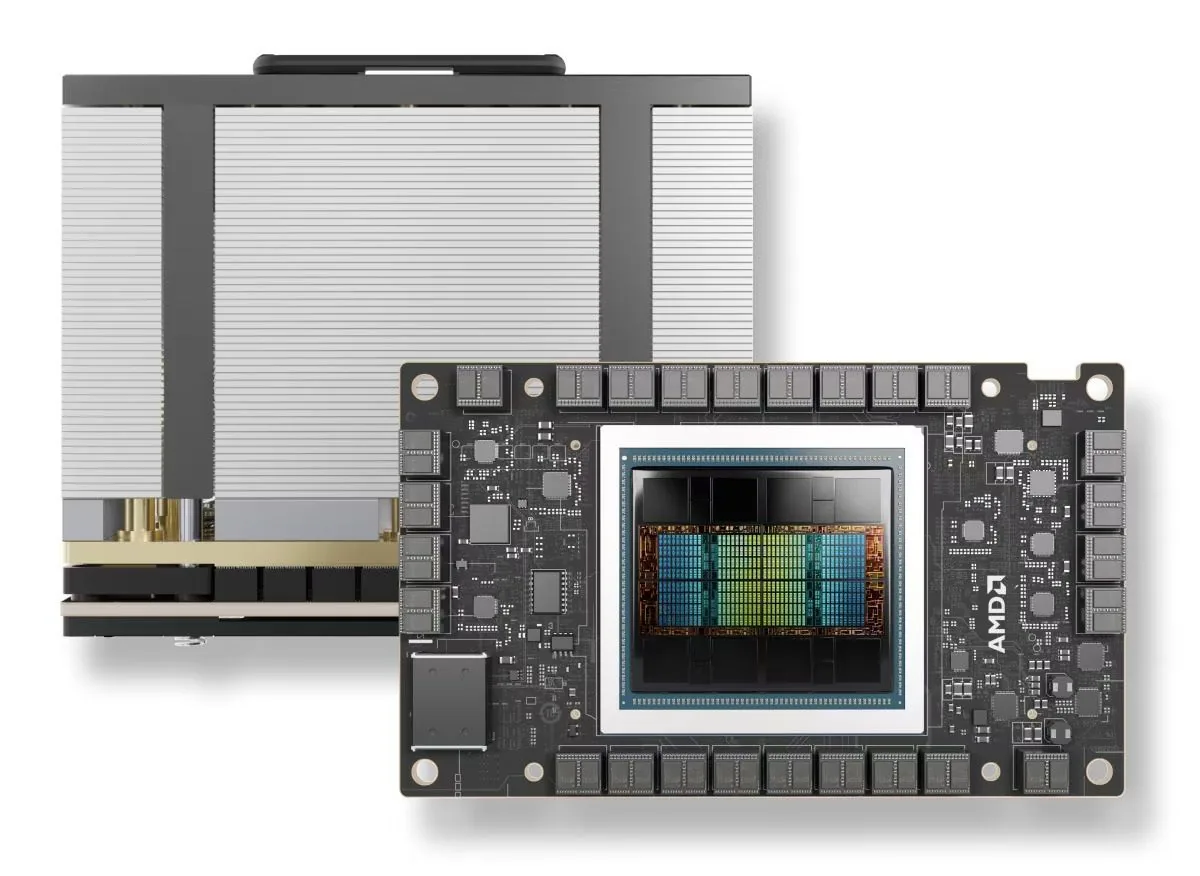
Let's set the scene: Nvidia has been running the AI hardware game like a mob boss running protection money. Their H100 GPUs are the backbone of every major AI training run from GPT-4 to Gemini. Companies have been paying whatever Nvidia asks—$25,000 to $40,000 per H100 unit—because there was no alternative. AMD has been watching from the sidelines like that one friend who swears they could've gone pro.
Except now AMD actually showed up with receipts.
The MI300X isn't some speculative prototype. This is a real product shipping now, with 192GB of HBM3 memory (compared to H100's 80GB HBM3), running on AMD's CDNA 3 architecture. The benchmark numbers are specifically around inference workloads—where the rubber meets the road for actually deploying AI models at scale. And AMD's claiming their chip beats H100 by 30% even when Nvidia gets to use their precious optimized software stack.
That software stack detail is crucial. Nvidia's CUDA ecosystem has been their Fort Knox. Every AI researcher learns CUDA. Every framework optimizes for CUDA first. AMD has been trying to crack this with ROCm for years, and it's been like watching someone try to break into a bank with a plastic spork. But if AMD can match or beat performance while their software is still "catching up," that's terrifying for Nvidia's long-term dominance narrative.
Here's where it gets spicy for the hype economy: Microsoft, Meta, and OpenAI have all been quietly buying MI300X units. When your biggest customers start hedging their bets, that's not a good sign. It's like when your ex starts following someone new on Instagram—the relationship isn't officially over, but everyone knows where this is going.
The timing couldn't be worse for Nvidia. They're dealing with the transition to their next-gen B100 and GB200 chips, which means some customers are asking, "Why pay premium for last-gen H100 when AMD's current-gen beats it?" It's the classic Osborne Effect, but AMD is the one wielding the knife.

But let's not get carried away with the AMD hype train just yet. Benchmarketing is an ancient art, and AMD has been known to cherry-pick workloads like a influencer cherry-picking their best angles. Real-world deployment tells a different story. CUDA's ecosystem advantage means most production AI infrastructure is built Nvidia-first. Migrating away isn't just swapping hardware—it's rewriting deployment pipelines, retraining engineers, and praying nothing breaks at 3 AM when your model is serving millions of users.
Still, 30% is 30%. In a world where AI companies are burning through billions on compute, a 30% performance advantage translates to real money. We're talking about companies that could save enough to fund entire startups just by switching their GPU supplier. That's the kind of math that gets CFOs excited and makes engineers learn a new software stack.
The broader context here is the AI infrastructure bubble we're all pretending isn't a bubble. Every week brings a new "revolutionary" AI product that needs massive compute to train and serve. The demand for AI accelerators is insatiable right now, and AMD finally has a product that can capture some of that spend instead of watching Nvidia vacuum up every dollar in the room.
What makes this particularly juicy is the console wars energy. AMD vs. Nvidia has the same vibe as PlayStation vs. Xbox, except the stakes are billions in data center contracts and the outcome will literally shape how fast AI capabilities advance. These aren't gamer bros arguing about frame rates—these are trillion-dollar companies fighting over the engine that powers the next decade of technological progress.
The smart money is watching three things: (1) Whether AMD can maintain this performance lead as Nvidia rolls out B100 updates. (2) If the ROCm software ecosystem actually matures or remains the "Linux desktop" of AI software—technically capable but perpetually not quite ready. (3) How Nvidia responds on pricing, because their margins have been obscene and they finally have incentive to compete.
For the hype watchers: this is the most interesting the GPU market has been since the 2020 graphics card shortage. AMD has a real shot at breaking Nvidia's monopoly, and monopolies breaking is always good for everyone except the monopoly. Expect aggressive marketing from both sides, benchmark disputes that belong on r/HardwareWars, and enough technical jargon to fill a thousand LinkedIn thought leadership posts.
Bottom line: AMD just proved the emperor has clothes, but they're not as fancy as everyone thought. The AI hardware market is finally becoming competitive, and competition breeds innovation faster than any startup pitch deck ever could. Grab your popcorn—this GPU war is just getting started, and the explosions are going to be spectacular.