Figure's Humanoid Factory Workers Are Real — And They're Boring
You've seen the viral videos: a robot doing a backflip, a humanoid dancing to pop songs, Optimus folding laundry like it's 1999. But the reality of robotics in 2026 is way more boring — and that's exactly the point. Figure, the Bay Area startup that raised $675 million with a promise to put general-purpose humanoids in factories, just dropped its first real-world deployment video. And it's painfully mundane: a robot slowly picking up a car part and placing it in a bin. No music, no swagger, no backflips. Just a repetitive task that a human would hate.
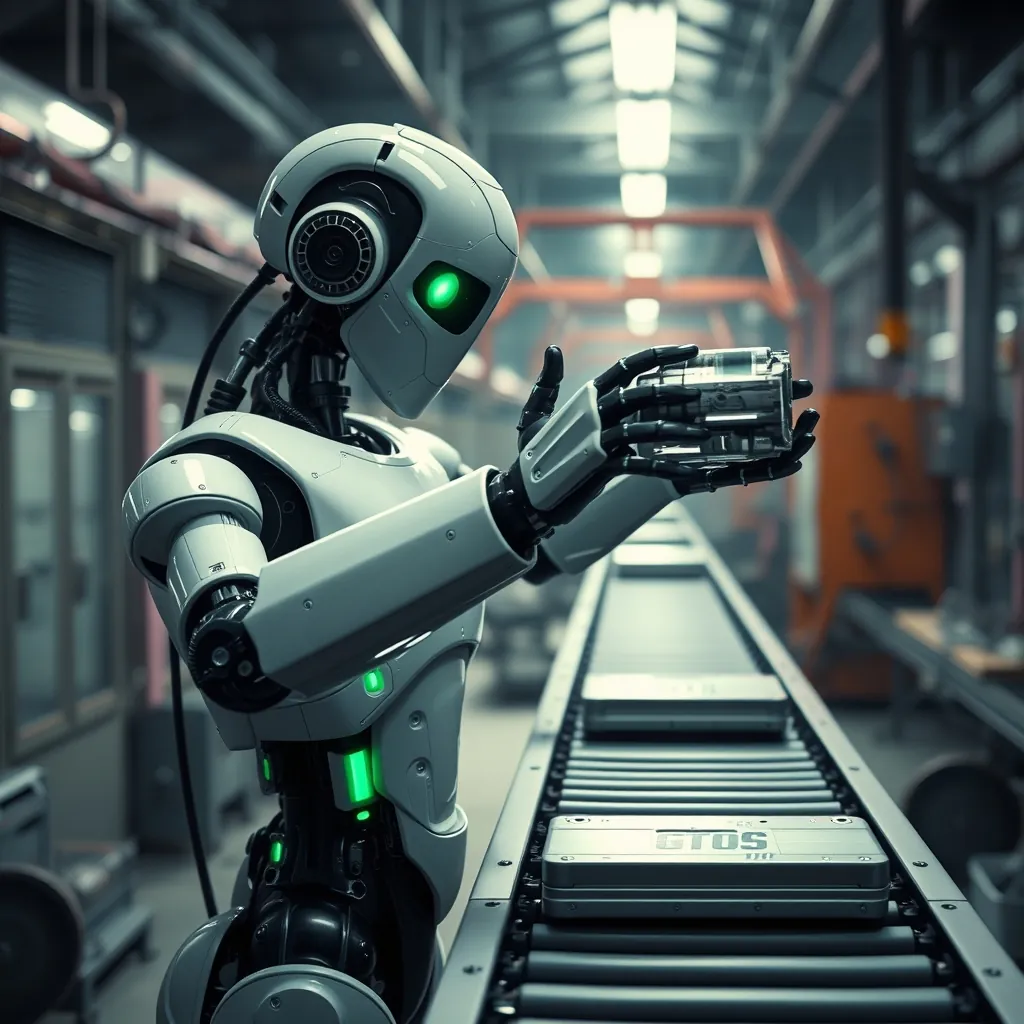
This is the moment the hype cycle crashes into the concrete floor of logistics. For years, we've watched Boston Dynamics' Atlas do parkour and Tesla's Optimus pour a drink, but the actual business case for humanoids has always been about replacing humans in dangerous, dull, and dirty jobs. Figure's bot, the F.02, is currently working at a BMW plant in Spartanburg, South Carolina. It's not welding or assembling — it's doing the kind of work that makes you question why we invented capitalism. The company claims the robot can operate for 20 hours on a single charge and has a 95% task completion rate. That's good enough to make economic sense when labor shortages hit.
But here's where it gets interesting: the boring machine is actually a Trojan horse. Figure's real play is about data. Every pick-and-place action is training data for the next generation of generalist AI. The robot isn't just moving parts — it's learning how to manipulate objects in the real world, which is the hardest problem in robotics. Meanwhile, Unitree is flooding the market with cheap humanoids that can do backflips but can't hold a screwdriver. And Boston Dynamics? They're still trying to sell Spot to construction sites, but Spot doesn't have thumbs.
Tesla's Optimus is the elephant in the room. Elon Musk promised that Optimus would be in Tesla factories by 2022. It's 2026. We've seen videos of Optimus picking up an egg without breaking it, but nothing about actual production deployment. The difference between Figure and Tesla is that Figure actually has paying customers. BMW, not Elon's hype machine, is validating the tech. The question isn't whether humanoids will work in factories — it's whether they'll work well enough to justify the cost. A single Figure robot costs about $50,000. That's cheaper than a year of a human worker's salary in the US, but only if the robot doesn't break down every week.
Gemini Robotics, Google's moonshot, recently showed off a robot that can follow natural language commands like "pick up the apple and put it in the bowl." It's impressive in a lab, but in a factory, the robot needs to handle thousands of variations without a Google researcher holding its hand. The real breakthrough will come when humanoids can learn a new task in minutes, not months. That's where Figure's data flywheel comes in — every hour of operation improves the model. But right now, the robots are still dumb as rocks. They can't generalize. Show them a part they've never seen, and they freeze.
So here's the brutal truth: the age of humanoid factory workers has arrived, but it's not the Terminator or Wall-E. It's a slow, clumsy, expensive machine that does one thing over and over. And that's actually a big deal. It means the technology has crossed the chasm from lab curiosity to industrial tool. The hype is over. The boring work begins. And for the first time, a startup is actually delivering on a promise that seemed like science fiction five years ago. Figure might not be making headlines with dance moves, but they're making money. And that's the most punk-rock thing a robot can do in 2026.