Fireworks AI: Specialized Models > AGI Fever Dreams
The AI discourse has become exhausting. Every week brings another sermon from the Church of AGI — OpenAI's Sam Altman evangelizing about digital deities, Google DeepMind chasing human-level reasoning benchmarks, Anthropic building constitutional superintelligence while a significant portion of the internet argues whether their latest model really passed the bar exam or just got lucky with the answer key. The valuations stretch into the stratosphere. The compute bills stretch even higher. And somewhere in the middle of this circus, Lin Qiao's Fireworks AI is running a completely different playbook.

Here's the pitch that nobody in the AGI congregation wants to hear: maybe the future isn't one mega-model to rule them all. Maybe it's thousands of smaller, specialized, fine-tuned models that actually do the job without requiring a data center the size of a small European nation.
Fireworks AI, founded by former Meta engineers led by Lin Qiao, has been quietly building the infrastructure for exactly this future. The company runs a platform where developers can deploy, fine-tune, and serve open-source models — Meta's Llama family, Mistral's growing arsenal, Stable Diffusion for image generation — at inference speeds that make the default API experience feel like you're back on a 56k modem downloading Napster tracks.
We're talking latency measured in milliseconds. We're talking about LoRA-based fine-tuning pipelines that let you customize a model for your specific use case without needing a PhD in machine learning or access to a GPU cluster that costs more than a Dubai penthouse. We're talking about the deeply unsexy, thoroughly unglamorous, actually useful layer of the AI stack that nobody on TechTwitter wants to hype because it doesn't come with a slick demo of a chatbot writing mediocre poetry.
The economics tell the real story. While OpenAI incinerates compute like there's no tomorrow — GPT-4's training run reportedly cost north of $100 million — Fireworks is betting that most enterprise use cases don't need a trillion-parameter god-brain. They need a 7B or 13B parameter model fine-tuned on their specific domain, one that runs fast, costs fractions of a cent per thousand tokens, and doesn't confidently hallucinate fabricated case law when a paralegal asks it to summarize a contract.
That last point matters more than the entire AGI debate. Specialized models, when properly fine-tuned on domain-specific data, consistently outperform general-purpose models on targeted tasks. A model trained on millions of legal documents drafts better contracts than GPT-4. A model fine-tuned on medical literature produces more clinically accurate summaries. This isn't speculation — it's what the open-source community has been demonstrating nonstop since Llama's weights leaked in March 2023 and the fine-tuning gold rush began.
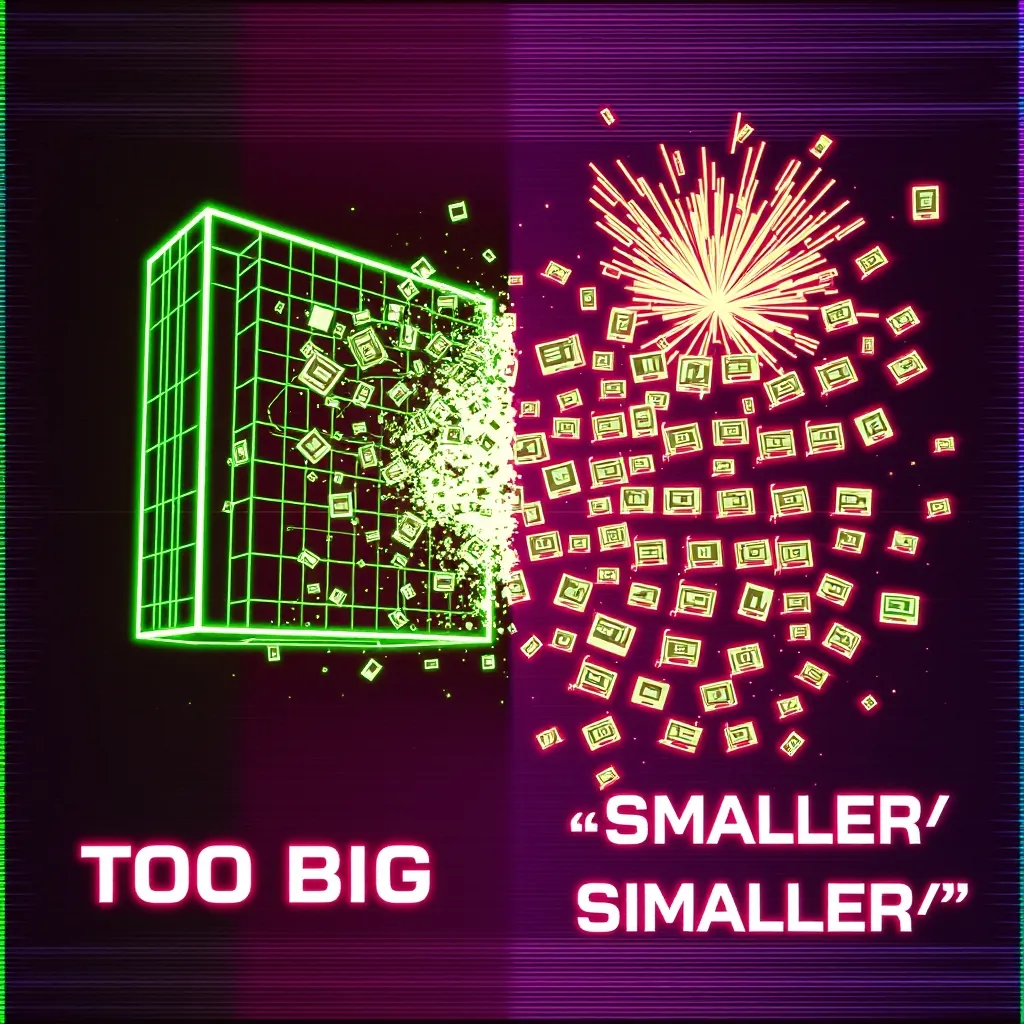
But here's where the thesis gets spicy. Fireworks isn't just selling inference speed or fine-tuning convenience. They're selling a philosophy — a structural bet that the AI market will fragment into a constellation of specialized models rather than consolidate around a few mega-models controlled by three or four trillion-dollar companies.
It's a deeply contrarian position. The conventional Silicon Valley wisdom says scale wins. Bigger models, more parameters, more training data, more compute — that's the path to dominance. OpenAI's entire strategy rests on this assumption. Google's too. Anthropic built their whole brand around it. The scaling hypothesis is treated like a law of physics in AI circles, even as diminishing returns start showing up in benchmark after benchmark.
But conventional wisdom has embarrassed itself before. The dot-com era taught us that infrastructure plays — the boring companies building the rails, not the flashy consumer brands building destinations on top — often capture the most value. AWS quietly became Amazon's profit engine while nobody was watching the server racks. Could Fireworks become the AWS of AI inference?
The comparison isn't flawless. AWS had first-mover advantage and Amazon's bottomless war chest. Fireworks competes against not just the API giants but a growing field of inference platforms — Together AI, Anyscale, Replicate, Modal, Baseten — all chasing the same open-source deployment market with overlapping value propositions. The differentiation war will be brutal.
The open-source model ecosystem isn't helping with clarity either. It's evolving at a velocity that makes crypto look stable. Meta's Llama 3 dropped in April 2024 and immediately devoured the open-source leaderboard across multiple parameter sizes. Mistral keeps releasing models that punch absurdly above their weight class. The gap between open-source and proprietary models narrows with every release cycle — and each time it narrows, Fireworks' value proposition strengthens.
Lin Qiao's background gives the thesis credibility. She came from Meta's PyTorch team, where she watched the open-source ML ecosystem mature from the inside. She understands that developers despise vendor lock-in. They want flexibility, control, customization, and the freedom to switch models when something better drops next month. Fireworks is building for that instinct.
The venture capital consensus agrees, at least with checkbooks. Fireworks pulled in $52 million in Series A funding led by Sequoia Capital, with NVIDIA's venture arm piling in — a signal that the GPU manufacturer sees inference infrastructure as a growth market worth betting on directly. This isn't meme-round capital. This isn't "we're building AGI, trust us bro" money. It's infrastructure investment backing a company with a clear view of where enterprise AI spending flows.
Here's the honest take: the AGI hype cycle will correct. Not because artificial intelligence isn't real or transformative — it absolutely is, probably more than anything since the internet itself — but because expectations have inflated past any recognizable trajectory. When the correction arrives, and it always arrives, the survivors will be companies with actual revenue, actual customers, and actual products solving actual problems with measurable ROI.
Fireworks might be one of those survivors. Not because they're chasing the most exciting vision or generating the most provocative headlines, but because they're building the critical infrastructure that the entire open-source AI ecosystem leans on. They're the plumbing. And as anyone who's dealt with a burst pipe knows, plumbing is infinitely more valuable than the fancy fixtures it connects to.
The specialized model thesis also tracks with how every previous technology wave actually evolved. The PC didn't kill specialized hardware. The smartphone didn't eliminate purpose-built devices. The cloud didn't end on-premises systems. General-purpose tools create markets; specialized tools capture value within them. Fireworks is positioning itself as the platform where that value capture happens at scale.
So while Altman podcasts about AGI timelines and superintelligence ethics, Lin Qiao is building the inference rails for the thousand specialized models that will quietly run the applications businesses actually deploy. One strategy generates headlines. The other generates revenue. History has a strong opinion about which one matters.