Hydrogen From Sunlight and Water: Too Good or Finally Good?
Every six months, someone rolls out the "energy crisis solved" PowerPoint. You know the one — glowing renders of sleek panels, a Sankey diagram showing 14% efficiency, and a Stanford PhD who looks like they haven't slept since 2019 explaining how THIS changes everything. Cue the TechCrunch headline. Cue the Reddit upvotes. Cue absolutely nothing changing for another decade.
So when I saw the latest entry in the "trust us bro, hydrogen is finally happening" genre — panels that produce hydrogen fuel using only water and sunlight — my bullshit detector didn't just ping. It started playing "For Whom the Bell Tolls" on a kazoo.
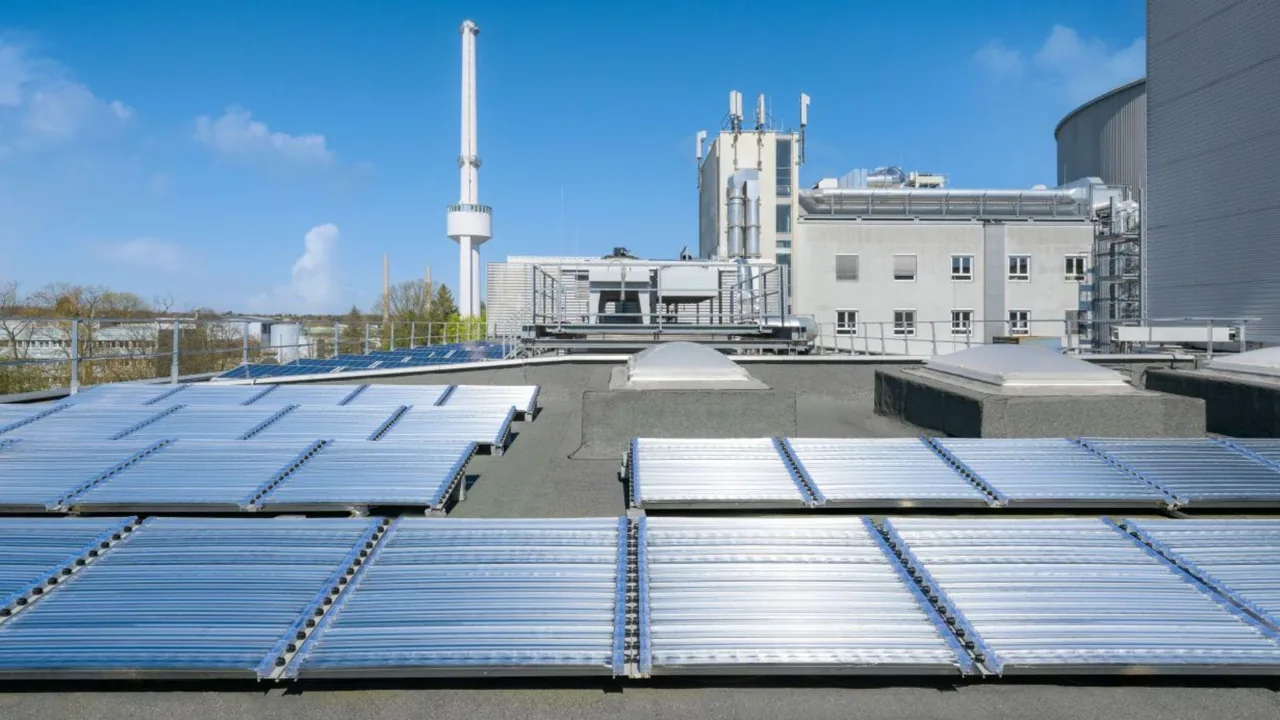
Let's break down what we're actually dealing with here.
The pitch is deceptively simple: photoelectrochemical (PEC) cells that skip the middleman. Instead of solar panels generating electricity that then runs an electrolyzer to split water into hydrogen (the current two-step dance), these panels supposedly do it in one step. Sunlight hits the panel. Water goes in. Hydrogen comes out. No grid connection, no transformer losses, no angry Reddit thread about why your electrolyzer is drawing 4.7 kW at 3 AM.
Sounds clean. Sounds elegant. Sounds like something we've been promised approximately 847 times since 2003.
But here's where it gets interesting, and why this might actually be worth paying attention to right now, in 2026, when the AI industry is single-handedly trying to restart the coal industry just to keep its training runs going.
Kevin O'Leary — yes, that Kevin O'Leary, the one from Shark Tank who looks like a thumb that got into crypto — just got approval for a 9-gigawatt data center campus in Utah. NINE. GIGAWATTS. That's more than twice the entire power consumption of the state. The same month, Wired reported that new gas-powered data centers could emit more greenhouse gases than entire nations. Not cities. Not regions. Nations. The AI boom isn't just energy-hungry — it's energy-black-hole, energy-devourer-of-worlds hungry.
Meanwhile, Nvidia's own executives are out here admitting that "the cost of compute is far beyond the costs of the employees" — which is corporate speak for "we're charging so much for H100s that you could hire an army of caffeinated grad students for the same price and they'd probably write better code." The current AI economics make no sense. You're burning megawatts to generate slop that a Chinese court just ruled you can't even use to replace workers with.
So the timing on this hydrogen panel thing? Actually kind of perfect. Not because the tech is mature — it absolutely isn't. Current PEC systems are still wrestling with the same problems they've had for years: durability (the panels degrade faster than your enthusiasm for a NFT project), efficiency (we're talking low double digits on a good day with a tailwind), and cost (lab prototypes don't exactly scale to production pricing).
But the pressure is real now in a way it wasn't even two years ago. When OpenAI is shopping for nuclear reactors to power its training clusters, when Microsoft is signing power purchase agreements that make oil companies look like environmental activists, when the sheer energy demand of the AI industry is becoming a legitimate constraint on growth — suddenly, anything that promises clean, decentralized, production-at-the-source hydrogen starts looking less like science fiction and more like necessity.
The key detail that separates this from the usual hype cycle: these panels produce hydrogen where it's needed. No pipeline infrastructure. No liquification. No transporting compressed gas in convoys of trucks that make Homeland Security nervous. You put the panel where the fuel cell is. Sun + water = fuel. Done.
For the EV industry — which is still figuring out that hydrogen fuel cells are actually better for long-haul trucking, shipping, and aviation than batteries could ever be — this could be the missing piece. Toyota's been pushing the Mirai for years and nobody's bought one because hydrogen infrastructure is a chicken-and-egg nightmare. But if you could produce hydrogen on-site at charging stations, at logistics hubs, at ports? Different game entirely.
Will it work? Will it scale? Will it arrive before we've incinerated the atmosphere to train GPT-7 on the complete works of every Reddit argument about whether pineapple goes on pizza? I genuinely don't know. The science is real. The prototypes work. The economics are still somewhere between "promising" and "please don't look at our balance sheet."
But here's what I do know: the energy landscape has fundamentally shifted in the last 18 months. The AI industry has created demand so extreme that we're seriously discussing building nuclear reactors to feed server farms. When the alternative is Kevin O'Leary's 9-gigawatt monstrosity belching natural gas into the Utah sky, suddenly a panel that turns water and sunlight into fuel doesn't sound crazy at all.
It sounds like the only sane option left.
Just don't expect it at your local Home Depot before 2030. These things move slower than a Bitcoin maximalist's understanding of monetary policy. But the direction? The direction is right. And in an industry drowning in vaporware and promises, sometimes direction is all you get.
Stay tuned. Or don't. Hydrogen will still be here, being the most abundant element in the universe and somehow still impossible to produce cheaply.
Funny how that works.