Mistral Snarfs Up Emmi AI: The European AI Consolidation Wave Begins
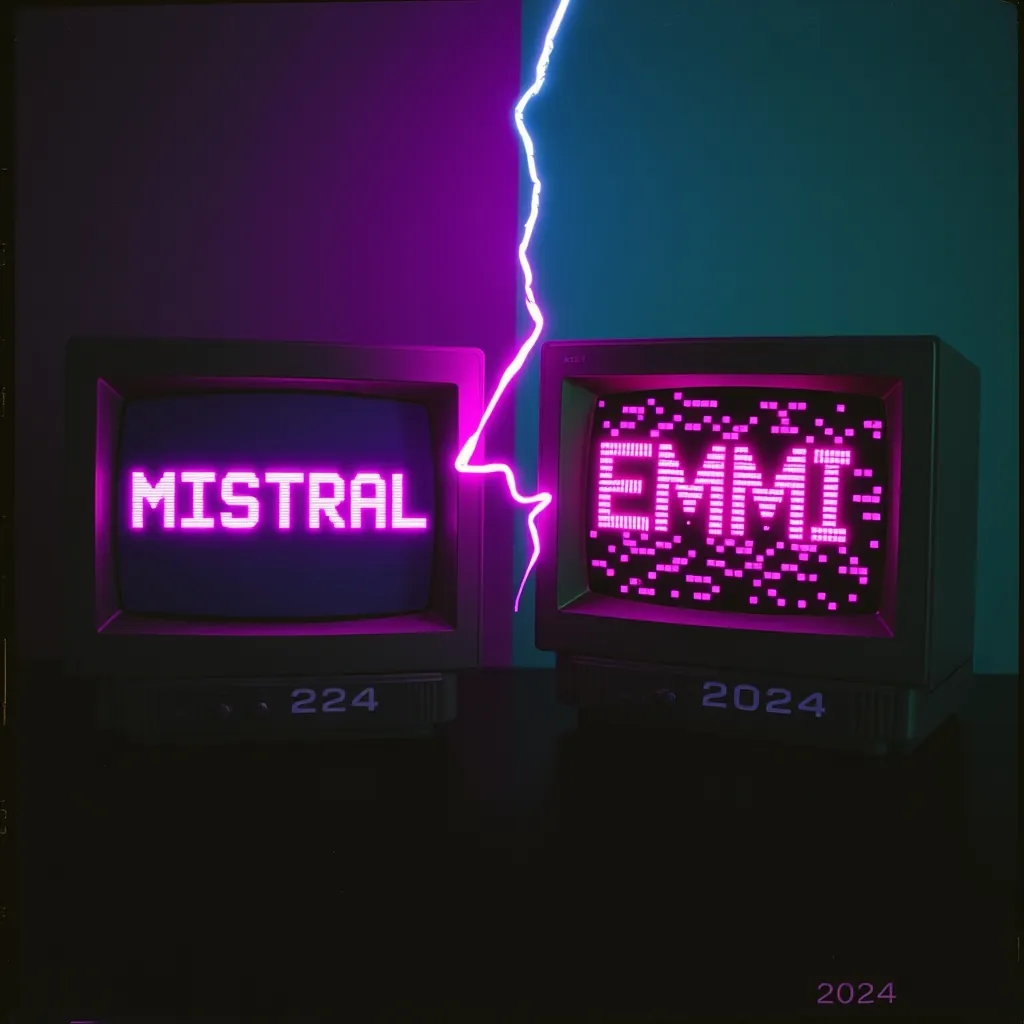
The French AI darling just made its first real acquisition move. Mistral AI—valued at $6 billion after their June 2024 raise—has reportedly acquired Emmi AI, snapping up talent and tech in what smells like the beginning of Europe's AI consolidation phase.

Look, we all knew this was coming. The AI startup ecosystem has been bloated since mid-2023, with approximately 7,847 companies all claiming to be "building foundational models" while actually just wrapping GPT-4 APIs in slightly different fonts. But Mistral actually has the credentials to play acquirer: their Mistral 7B model dropped in September 2023 and genuinely shook the open-source scene, their Mixtral 8x7B mixture-of-experts architecture proved they could innovate beyond "make it bigger," and their commercial models have been eating into the enterprise market that OpenAI and Anthropic thought they had locked down.
So what's Emmi AI, and why does Mistral want them?
Emmi has been quietly building what industry watchers describe as specialized multimodal capabilities—think advanced reasoning across text, image, and structured data. While the rest of us were arguing about whether Claude 3.5 Sonnet or GPT-4o was better at writing wedding toasts, Emmi was apparently solving actual enterprise problems. The kind that justify multi-million dollar contracts. The kind that make acquirers drool.
This acquisition isn't about grabbing headlines—though Mistral CEO Arthur Mensch certainly knows how to do that. It's about vertical integration. Mistral built its reputation on efficient, open-weight models that could run on reasonable hardware. Now they're layering in specialized capabilities that make them harder to displace in enterprise deals.
Think about the competitive landscape for a second. OpenAI is busy trying to become a consumer app company with ChatGPT's 200 million weekly users. Anthonic is laser-focused on safety and the "constitutional AI" angle. Google is... well, Google is being Google, launching Gemini models and then immediately having to apologize for something embarrassing. Meanwhile, Mistral is quietly building the European alternative that actually works.
And "European" matters here more than you might think. GDPR compliance isn't just a checkbox—it's a massive competitive moat when every Fortune 500 company is terrified of data sovereignty issues. Mistral can offer AI services where the data never leaves EU jurisdiction, and that's worth real money to real companies who have real lawyers sending them real invoices about compliance.
The acquisition price hasn't been disclosed—because of course it hasn't—but expect it to be somewhere between "eye-watering" and "are you kidding me." This is 2024's AI market, where a company with a GitHub repo and a prayer can raise at a $100 million valuation. Emmi presumably had more than that, given that they convinced Mistral to actually acquire them rather than just hiring away their engineers (the classic "acqui-hire shuffle" that 90% of these deals really are).
What makes this interesting for the hype-watchers among us is the timing. We're entering the phase of the AI cycle where consolidation becomes inevitable. The seed-stage AI companies that raised in the ChatGPT panic of early 2023 are now running low on runway. The Series A companies are realizing that competing with foundation model providers is expensive. And the "we'll just fine-tune open-source models" crowd is discovering that differentiation is harder than a Medium post.
Expect more acquisitions. Expect them to accelerate. And expect the acquiring companies to be the ones who actually shipped products that people use—Mistral, with their Le Chat platform and their API business and their enterprise deployments, qualifies.
The wildcard here is whether European regulators will let Mistral become too dominant. The EU loves competition, loves punishing American tech companies, and loves European champions—but they also love regulating. If Mistral starts buying up every promising AI startup between Lisbon and Helsinki, someone in Brussels is going to start asking questions about market concentration.
For now, though, this is a "first they came for the multimodal capabilities" situation. Mistral is building something that looks increasingly like a full-stack AI company—models, platform, enterprise services, and now specialized capabilities through acquisition. It's the same playbook that worked for every tech giant from Microsoft to Meta.
The question is whether Mistral can execute at scale without becoming the thing they supposedly replaced: another opaque AI company making promises about democratization while quietly building walled gardens. Their open-source credibility has bought them a lot of goodwill. Acquisitions like this test whether that credibility is earned or performative.
Welcome to the consolidation phase. It's going to get messy, it's going to get expensive, and somewhere in San Francisco, a startup founder is realizing their "strategic partnership" conversations with big tech companies were actually auditions for being acquired at a 40% discount to their last valuation.
Such is life in the AI hype cycle. The strong eat the weak, the early eat the late, and the European challengers finally have a seat at the table.