Mistral AI's Open-Source Soul Is Already for Sale
Remember when Mistral AI was going to save open-source AI? That was cute. The Paris-based startup launched in 2023 with a simple pitch: we'll build frontier models and give them away. Mistral 7B dropped in September 2023 — a 7.3-billion-parameter model that punched above Llama 2 13B on benchmarks, fully open-weights, Apache 2.0 license. The community lost its mind. Finally, a European champion. Finally, someone pushing back against the closed-door American labs. Finally, a reason to care about French tech besides Business Objects.
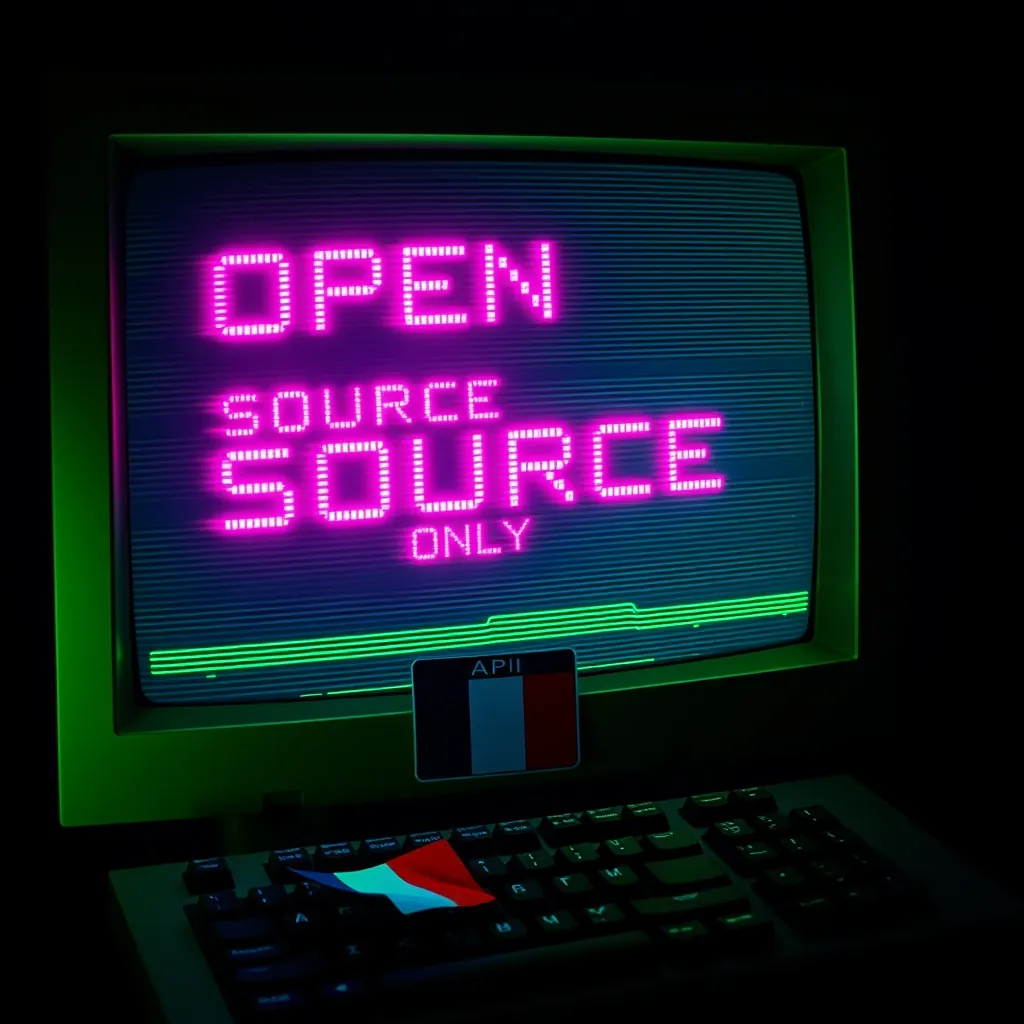
Then the money showed up.
Mistral raised €105 million in its June 2023 seed round — one of the largest seed rounds in European history. By December 2023, they'd pulled in another €385 million in a Series A led by Andreessen Horowitz, valuing the company at roughly $2 billion. Then came reports of another €600 million round in mid-2024, pushing the valuation toward €6 billion. Investors included NVIDIA, Salesforce, and BNP Paribas. The open-source darling was suddenly one of the most heavily backed AI startups on the planet, and the expectations that come with that kind of cash don't mix well with giving your best models away for free.
The pivot was gradual but unmistakable. Mixtral 8x7B arrived in December 2023 — a Mixture of Experts architecture with 46.7 billion total parameters and 12.9 billion active per token, Apache 2.0, competitive with GPT-3.5 on many benchmarks. It was genuinely impressive. The community celebrated. But then came Mistral Large, the flagship, and it was closed. Proprietary. Available only through their API platform, La Plateforme, or via cloud partners. No weights. No fine-tuning access. No community contributions.
Mistral Large 2 launched in July 2024 with 123 billion parameters and a claimed 84.0% on MMLU, nipping at GPT-4 Turbo's heels. It was strong — arguably the best European frontier model. It was also exactly the kind of product Mistral was founded to resist. The company started framing open-weights as a "tier" of their offering rather than their core identity. CEO Arthur Mensch — formerly of DeepMind, where he worked on retrieval-augmented generation and efficient transformers — talked about "balanced" approaches. The vibes shifted.
Codestral, their code generation model launched in May 2024, had its own controversy. Initially released under a license that wasn't quite open-source — the Mistral Non-Production License — it restricted commercial use and sparked backlash from the free-software crowd. Mistral walked some of it back, but the damage was done. The company that was supposed to be open AI's champion was playing the same licensing games as everyone else.
Here's the thing: Mistral isn't doing anything wrong. They're a startup with billion-euro valuations and 100+ employees. They need revenue. Open-weights models don't generate recurring revenue. Enterprise API contracts do. Sovereign cloud deals with European governments do. The economics are straightforward, and Mensch knows this better than the Reddit threads complaining about "betrayal."

But the hype gap is real. Mistral built its brand and early momentum on openness, and now the most interesting things they do are locked behind an API. The open-weight releases — Mistral Nemo (12B, July 2024, built with NVIDIA), Ministral 8B (October 2024) — are good models, but they're clearly not the company's priority. They're breadcrumbs. Meanwhile, Le Chat, the consumer chatbot, exists in a crowded field where ChatGPT, Claude, and Gemini dominate mindshare, and European sovereignty is a nice pitch but not a product feature.
The agent wave is where this gets interesting. Mistral has been pushing its platform as infrastructure for building AI agents — function calling, JSON mode, structured output, the whole toolkit. Their Agents API and platform features launched through 2024, with pricing that undercuts OpenAI on many tiers. Mistral Large 2 at roughly €2 per million input tokens is aggressive. If enterprises are shopping for a non-American frontier model — and plenty are, for regulatory and geopolitical reasons — Mistral is the obvious choice. The question is whether "obvious choice for European sovereignty" is a big enough market to justify a €6 billion valuation.
Probably not on its own. But Mistral isn't just selling sovereignty. They're selling competence. Mistral Large 2 is legitimately strong on code and reasoning. Mixtral 8x22B (April 2024, 141B total parameters, 39B active) remains one of the most efficient open-weight models available. The technical team — drawn from DeepMind and Meta's FAIR — is elite. If anyone can sustain a third-place position in the frontier model race behind OpenAI and Anthropic, it's probably them.
The problem with third place in AI is that it's a brutal spot. Google has infinite money and distribution. Meta has infinite money and doesn't need model revenue. xAI has Elon's attention span and GPU hoard. Anthropic has the safety narrative and Claude's momentum. Mistral has... France? NVIDIA's blessing? A head start on European enterprise deals?
The open-source community will keep watching Mistral's model releases the way sneakerheads watch Nike SNKRS drops — hoping for something good, knowing it'll probably be a quick sellout followed by a "better luck next time." The difference is that Nike doesn't promise to democratize footwear and then lock the best designs behind a subscription.
Mistral's not dead. They're not even struggling. But the story changed. The scrappy open-source insurgents are now a well-funded frontier lab that happens to drip-feed weights to keep the community engaged. That's not betrayal — it's business. But let's stop pretending it's something else.