Pokemon Cards With Embedded LEDs Is Peak Hype Stupidity
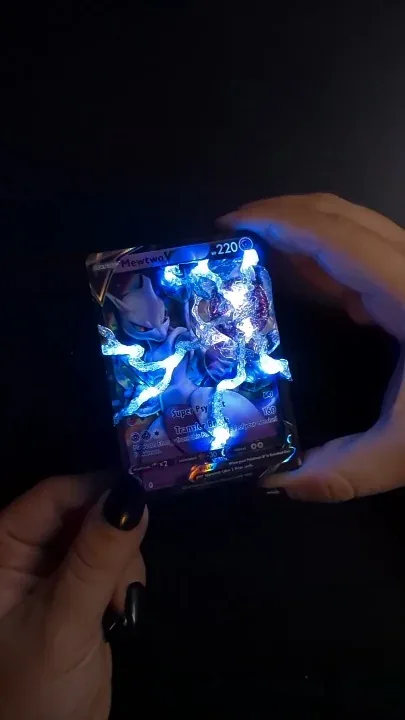
Some maniac on r/PokemonTCG just figured out how to shove flickering LEDs into a cardboard rectangle and the collectibles world may never recover. The video, posted with the deceptively simple caption "Finally was able to put flickering lights in a card," shows what happens when hardware-hacking culture collides with the multi-billion dollar Pokemon trading card industrial complex. And honestly? It rules.
Let's set the scene. Pokemon TCG is already a hype monster of staggering proportions. A single Charizard in mint condition can fetch $400,000 at auction. The Pokemon Company prints roughly $1 billion in card product annually. Scalpers camp outside Target for new drop days like it's a Yeezy release in 2015. The secondary market for graded cards operates with more liquidity than some small nation currencies. And now, some DIY psychopath with a soldering iron and zero chill has decided that cardboard alone isn't enough. The cards need to glow.
The video shows what appears to be a Pokemon card—likely a custom or altered card, though the specifics are obscured by the lighting—with tiny embedded LEDs that flicker and pulse. It's the kind of project that makes you simultaneously think "that's incredible" and "this person has spent 200 hours on something a dog will eventually chew." The craftsmanship is undeniable. The obsession is questionable. The hype potential is off the charts.
Here's where this gets interesting from a tech-hype perspective. We've been hearing about "smart collectibles" for years. Remember when NFTs were supposed to give physical objects digital souls? Remember when companies promised AR-enabled trading cards that would spring to life through your phone? Remember when every Kickstarter for a card game promised some app integration that never shipped? The physical-digital collectible hybrid space is a graveyard of overpromises and underdeliveries.

But this DIY LED hack? This is the opposite trajectory. This isn't a corporation overpromising tech integration to juice sales. This is a single obsessed fan reverse-engineering the concept from the ground up, using components that probably cost $3 on AliExpress. It's punk rock. It's stupid. It's beautiful.
The Pokemon card modding community has existed for years—there are artists who alter cards with paint, custom holos, even resin embedding. But active electronics hit different. This isn't just decoration; it's augmentation. The card now has a power source. It has circuitry. It's one step away from having a Bluetooth chip and screaming "CHARIZARD" every time you walk past it at a convention.
Which, let's be real, is probably coming. Because if there's one thing the hype economy loves, it's taking a good thing and slapping a battery in it. We've seen this story before with Stanley cups getting LED bases, sneakers with app-controlled color-shifting soles (looking at you, Nike Adapt at $350 a pop), and those absurd limited-edition Pop Mart figures with built-in speakers. The convergence of collectible culture and cheap electronics is inevitable. China's Shenzhen ecosystem can produce custom LED modules for pennies. The barrier to entry is basically zero.
The cynical read: expect Pokemon knockoffs with built-in LEDs flooding Temu by Q4 2025. Expect "limited edition" officially licensed glowing cards at a 400% markup. Expect scalpers to hoard them. Expect TikTok unboxing videos with 10 million views. Expect the cycle to repeat until we're all buried in blinking landfill.
The optimistic read: this represents genuine grassroots innovation in a space that's been dominated by corporate artificial scarcity for too long. If individual creators can mod cards with electronics, what else becomes possible? Temperature-sensitive ink that changes with body heat? NFC chips that link to AR battle animations? E-ink displays thinner than a card sleeve showing animated sprites? The tech exists. The components are cheap. The demand is clearly there.
What makes this particular moment fascinating is the timing. Pokemon TCG is riding a massive wave of mainstream cultural relevance. The Pokemon World Championships drew record viewership in 2024. New sets sell out in hours. Influential creators like LeonHart and Smpratt have built empires on Pokemon card content. The market is primed for something that breaks the mold of "print cardboard, put in pack, sell pack." And the holographic technology that made Pokemon cards iconic in the 90s—the same foils that mesmerized every millennial on the playground—is now ancient history. Kids today have OLED screens in their pockets. A reflective foil pattern doesn't hit the same when you've got TikTok on loop.
So maybe embedded LEDs aren't stupid. Maybe they're the natural evolution of a collectible format that's been technologically stagnant for 25 years. Maybe the person who posted that Reddit video isn't a maniac—maybe they're a prophet.
Or maybe it's just a cool party trick that'll get three upvotes and be forgotten by Tuesday. That's the hype economy for you. Everything is either the future of human civilization or a complete waste of time, and you never know which until the algorithm decides.
Either way, if someone figures out how to put a tiny speaker in a Pikachu card that plays the anime voice, take my money. I'm not proud. I'm just honest about my weaknesses.
The future of collectibles isn't digital. It's not physical. It's whatever unholy hybrid emerges when obsessed fans with soldering irons meet cheap Chinese electronics and a Reddit audience hungry for the next dopamine hit. God help us all.