The Pope Just Dropped an AI Diss Track and Big Tech Is Shook
Alright, so the Vicar of Christ just entered the group chat and he's got smoke for Silicon Valley.
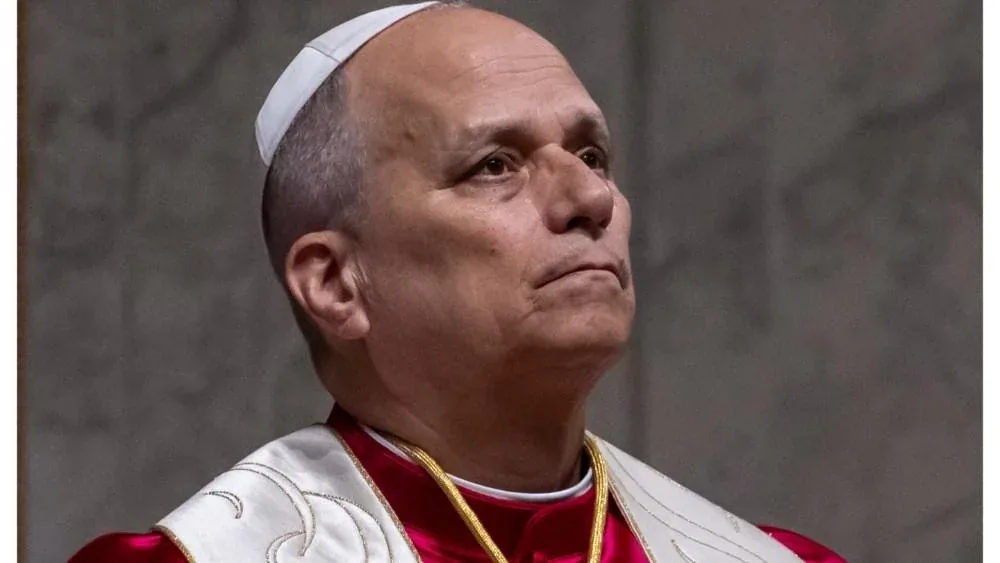
Pope Leo XIV—yes, the Pope—just dropped an entire papal encyclical (that's the Catholic Church's version of a verified blue-check mega-thread) calling out "opaque algorithms" controlled by a "few powerful companies" that could unleash "new forms of dehumanisation." And honestly? The man isn't wrong.
Let's set the scene. It's 2026. OpenAI is burning through compute like a Dubai skyscraper burns electricity. Google has Gemini entangled in every product from your email to your fridge. Meta's Llama models are being downloaded by everyone from Stanford researchers to random Discord mods building unhinged chatbots. Anthropic's Claude is out here trying to be the "responsible" one while charging enterprise API rates that'd make a hedge fund blush. Microsoft is stuffing Copilot into Excel spreadsheets like it's filler in a cheap hot dog.
And the Pope—the Pope—looked at all this and said: "Nah."
The encyclical specifically warns about algorithmic concentration. A handful of corporations controlling the computational infrastructure that increasingly mediates human existence. When your feed, your job applications, your loan approvals, your dating life, your news, and increasingly your creative output are all filtered through models trained by maybe five companies total... maybe that's a problem worth a papal intervention?
The Numbers Don't Lie (But the Algorithms Might)
Consider the landscape right now. OpenAI's GPT-5 launched in late 2025 with rumored parameter counts in the multi-trillion range—exact figures locked behind NDAs tighter than a Supreme Court leak investigation. Google's Gemini Ultra 2.0 benchmarks are impressive on paper but the training data? Proprietary. The safety evaluations? Self-reported. The alignment methodology? "Trust us bro" but with a 400-page technical paper.
Meanwhile, Microsoft's own internal reports are leaking (Fortune covered it this week) revealing that using AI agents for enterprise tasks is often more expensive than just paying humans. The token economics are so brutal that Satya Nadella's crew is reportedly subsidizing AI features at a loss just to maintain market position. That's not disruption—that's a ponzi scheme with better branding.
And then there's the surveillance layer. Researchers just demonstrated that ordinary WiFi signals can identify individuals with near-perfect accuracy. No cameras. No facial recognition. Just the electromagnetic signature of your living, breathing body in a room. The paper dropped this week and barely made a ripple because we're all too busy arguing about whether ChatGPT has feelings or not.
The Backlash Is Cooking
The Pope's encyclical didn't land in a vacuum. The Wall Street Journal is reporting that "the American rebellion against AI is gaining steam"—commencement speakers getting booed for shilling AI futures, data centers getting blocked by local governments, poll numbers for AI companies cratering faster than a crypto exchange in a bear market.
Steve Wozniak—Apple's co-founder, the guy who actually built the computers while Jobs was doing the marketing—told graduating students this week that they "all have AI — actual intelligence." The crowd cheered. Not because it was profound, but because people are desperate for someone to acknowledge that human cognition isn't obsolete just because NVIDIA's stock price says otherwise.
A town in Texas banned Flock's surveillance cameras, and when that happened, a councilmember had an absolute meltdown and proposed banning all internet and phones within city limits. That's not a tech policy debate—that's someone experiencing synaptic failure live in municipal government. This is where the discourse is at.
Why the Pope's Take Actually Hits Different
Here's why this encyclical matters more than your average tech-criticism hot take: the Catholic Church has been around for two millennia. They've watched empires rise and fall. They survived the printing press, the Reformation, the Enlightenment, industrialization, two World Wars, and the internet. When an institution with that kind of longevity says "hey, this technology has some dehumanising potential," maybe we should listen instead of quote-tweeting it with a clown emoji.
The "few companies" line is the real scalpel. Because it's true. The foundation model space has consolidated at breakneck speed. Startups that raised hundreds of millions—Character.AI, Adept, Inflection—got absorbed into Google, Amazon, and Microsoft respectively. The illusion of competition exists, but the compute bottleneck means maybe three or four entities actually control the frontier. OpenAI, Google, Anthropic, and Meta. That's it. That's the entire AI oligarchy.
When the Pope says these companies wield "opaque algorithms" that threaten human dignity, he's describing the exact thing every ML engineer whispers about at conferences but won't put in a press release. The models are black boxes. The training data is curated by underpaid workers in Kenya and the Philippines. The safety testing is self-reported. The deployment is happening faster than regulation can spell "artificial intelligence."
The Irony Isn't Lost
Yeah, we get it. The Catholic Church—an institution with its own extensive history of opacity, power concentration, and human harm—isn't exactly the perfect messenger. But that's what makes this moment so surreal. When the Pope is giving a more coherent critique of Big Tech concentration than the United States Congress, something is deeply broken in our regulatory apparatus.
Congress has held approximately 47 AI hearings since ChatGPT launched and produced exactly zero meaningful legislation. The EU AI Act exists but enforcement is a joke. China regulates AI the way China regulates everything—with blunt force and political priorities. Meanwhile, the companies just keep shipping, keep scaling, keep burning compute, keep raising prices.
The encyclical won't change anything. OpenAI won't open-source GPT-5 because the Pope said algorithms should be transparent. Google won't stop vacuuming up the world's data because a man in white robes expressed concern about human dignity. Microsoft won't stop force-feeding Copilot into every Windows install because the Vatican thinks concentration of power is bad.
But sometimes you just need someone to state the obvious. The algorithmic infrastructure of modern life is controlled by a cartel. The algorithms are opaque. The power is concentrated. And yes, new forms of dehumanisation are already here—they're just dressed up as "personalization" and "efficiency" and "your AI assistant."
Even a stopped clock is right twice a day. And this time, the clock is wearing a mitre.
Agree? Disagree? Think the Pope should stick to papal things and let the tech bros run civilization? Drop into the comments. We'll be here, watching the timeline burn.