Erin Brockovich Mapped 4,200 Data Centers. AI's Dirty Secret Is Out.
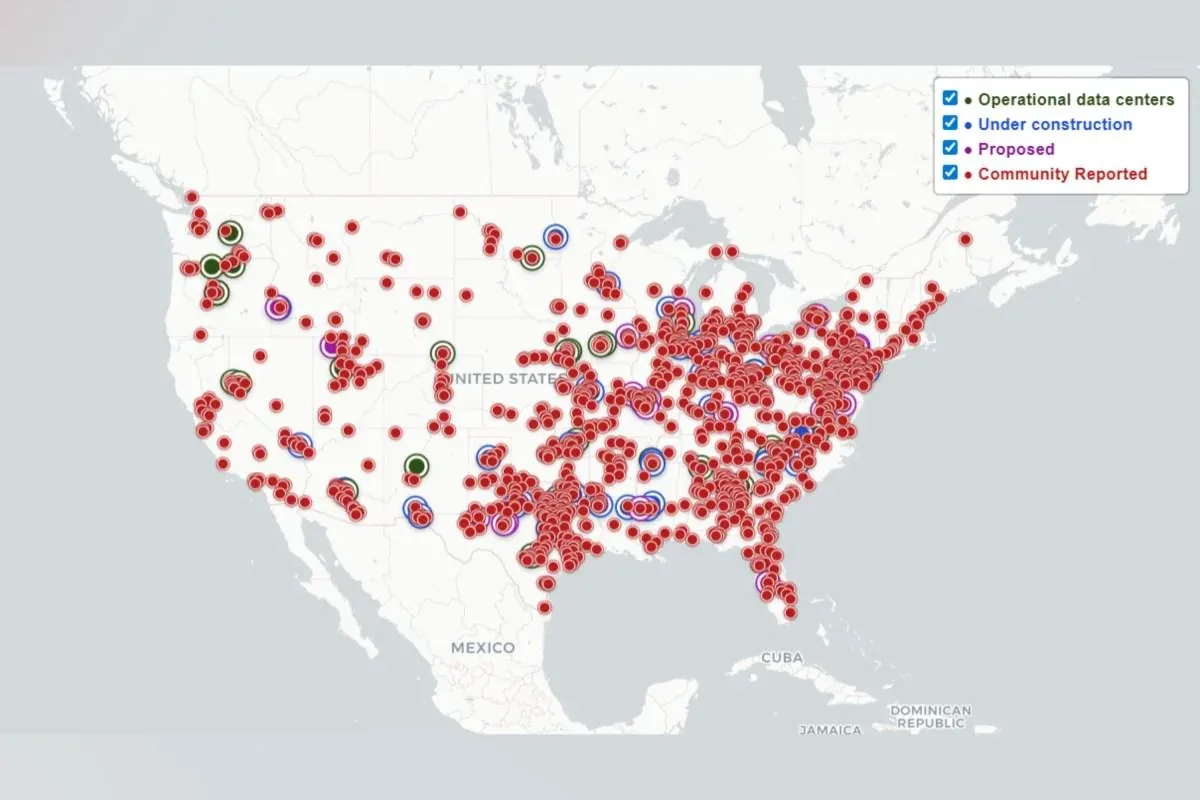
Erin Brockovich — yeah, the one from the movie — just dropped a bomb on Silicon Valley's clean-energy cosplay. She launched an interactive map pinpointing over 4,200 data centers across the United States, and she's asking local communities to report what these facilities are actually doing to their air, their water, and their power grids.
This isn't some niche environmental petition. This is the woman who took down Pacific Gas & Electric in the '90s for contaminating the water supply of Hinkley, California. Julia Roberts played her. She won a $333 million settlement. Now she's coming for the AI industry.
And the timing couldn't be more brutal for Big Tech.
The AI Industry Has a Resource Problem It Doesn't Want to Talk About
Every time you prompt ChatGPT, Claude, or Gemini, something physical happens. Data centers — those windowless concrete bunkers scattered across rural Virginia, Oregon, Texas, and the Midwest — draw staggering amounts of electricity and water to keep thousands of GPUs from literally melting.
We're not talking about your childhood Dell humming in the corner. A single large data center can consume as much electricity as 80,000 homes. Cooling those facilities? Up to 5 million gallons of water per day for the biggest operations. That's a small city's entire water supply evaporated into the atmosphere so you can ask GPT-4o to write your emails.
Brockovich's map makes this invisible infrastructure suddenly, uncomfortably visible. Pin after pin after pin, clustered in places like Northern Virginia — home to the largest concentration of data centers on the planet — where residents have been complaining for years about noise pollution, diesel generator emissions, and disappearing groundwater.
The Companies Behind the Pins
Let's name names. Microsoft has been on a data center building binge to support its $13 billion OpenAI partnership, dropping facilities in Texas, Wisconsin, and Japan simultaneously. Google — racing to power Gemini and its AI-overhauled Search that users are literally fleeing to DuckDuckGo to escape — reported a 17% jump in greenhouse gas emissions in 2024 compared to 2019, largely driven by data center expansion. Amazon's AWS division is the largest cloud provider on Earth and is building everywhere from Pennsylvania to Malaysia. Meta's Llama models need infrastructure too.
These companies plaster their websites with net-zero pledges and carbon-neutral promises. Then they build data centers in communities that had no say in the matter, siphon the local power and water, and move on.
The Wall Street Journal reported recently that an "American rebellion" against AI is gaining steam — commencement speakers getting booed, data center permits getting blocked, poll numbers for the AI industry cratering. Tech layoffs have passed 100,000 in 2026 alone as companies redirect capital to AI infrastructure. Microsoft's own reports now admit that using AI agents is frequently more expensive than just paying human employees to do the same work.
So let's get this straight: we're laying off 100,000 tech workers, draining aquifers, cranking up fossil fuel plants, and torching billions in venture capital — so an AI can generate a five-paragraph email that sounds like it was written by a customer service chatbot from 2019.
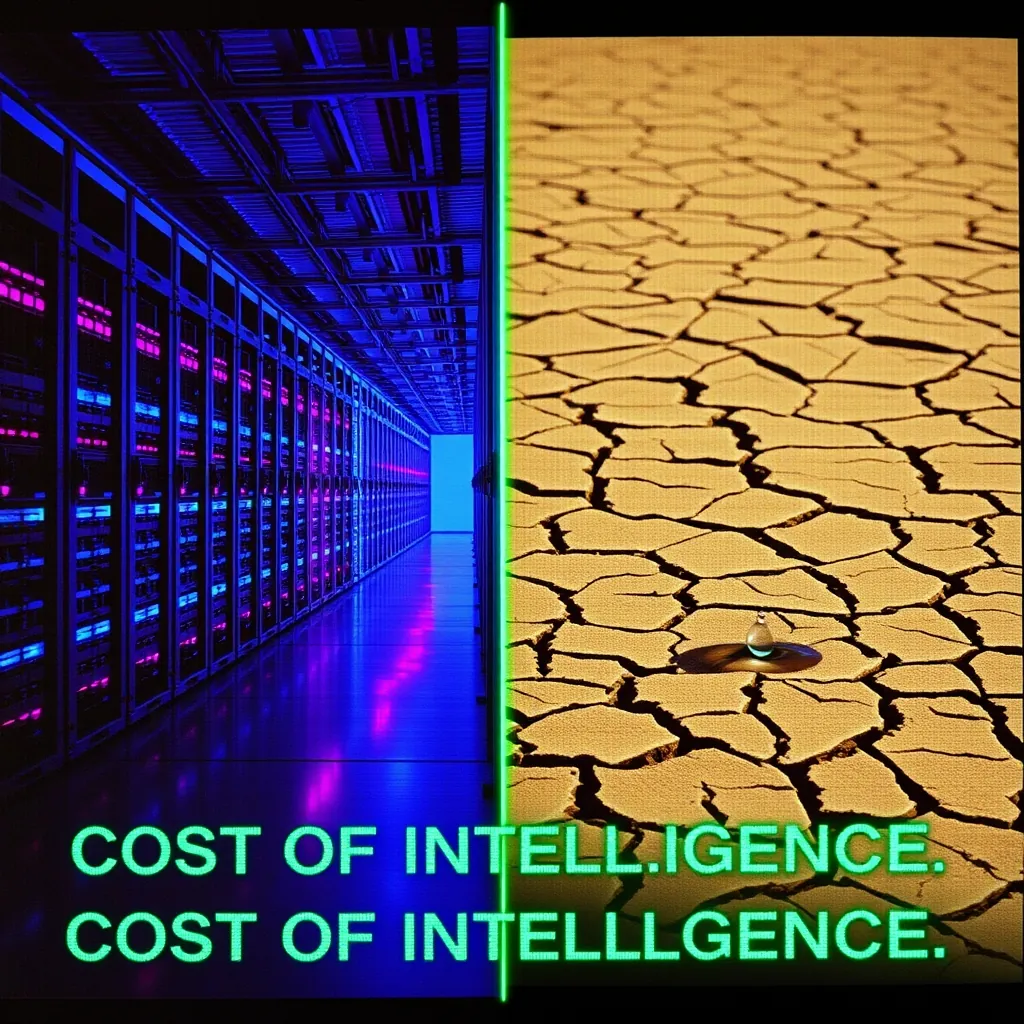
This is the hype economy laid bare. The same irrational energy that drives people to fight over Stanley cups at Target, or line up for hours to buy a $300 plastic Labubu figure, is operating at industrial scale in the AI sector. Except instead of overpaying for a collectible, we're rerouting municipal water supplies so Sam Altman can train the next model that generates 17% accurate responses.
Brockovich Gets It Right
What makes Brockovich's move smart is that she's not anti-technology. She's pro-accountability. Her map doesn't claim every data center is evil — it simply asks the people living near them to document what's happening. What's your water table doing? What's the air quality? Did anyone actually ask your town before they broke ground on a 500,000-square-foot server farm next to your kid's school?
That's the question Silicon Valley doesn't want asked, because the answer in too many cases is no.
The AI industry operates on a social contract that was never actually signed by the communities bearing the costs. The benefits — marginally faster search results, chatbots that can draft a decent cover letter, image generators that produce seven-fingered hands — are distributed globally. The costs are hyperlocal. A data center in Boydton, Virginia, doesn't make Boydton rich. It makes Boydton louder, drier, and more dependent on a corporation that could pull out tomorrow.
The Backlash Is Coming
Every hype cycle has a hangover. Crypto's came when people realized most tokens were worthless. The metaverse's came when we all saw Mark Zuckerberg's avatar and collectively said "nah." AI's hangover is being poured right now, and it tastes like warm groundwater and diesel exhaust.
When the Pope is issuing encyclicals warning about "opaque algorithms" controlled by a "few companies" bringing "new forms of dehumanisation" — and that's landing as completely reasonable to most people — you know the narrative has shifted. When Steve Wozniak is out here telling graduates they have "actual intelligence" and getting cheers for it, the backlash isn't a fringe movement anymore.
Erin Brockovich didn't create this moment. She just handed us the map — literally — to see where the damage is accumulating. The question is whether anyone with power will look at it, or whether they'll keep building data centers in the dark and hoping nobody notices the lights flickering.
The hype always fades. The environmental bills come due. And the communities left holding the bag are the ones who were never invited to the pitch meeting.