AI Giants' Data Grab Finally Catches a Lawsuit
The trillion-parameter AI gold rush always relied on your data. Now Perplexity, Meta, and Google face a $12.5B lawsuit that could expose the whole dirty training pipeline.
The trillion-parameter AI gold rush always relied on your data. Now Perplexity, Meta, and Google face a $12.5B lawsuit that could expose the whole dirty training pipeline.
DeepSeek R1 cost $5.6M to train and matched OpenAI's o1. NVIDIA lost $600B in a day. The open-source AI revolution is here and Wall Street's late.

Meta's Ray-Ban smart glasses finally found their killer use case: helping blind veterans see. It's genuinely good tech wrapped in obviously calculated PR — and somehow both things can be true at once.
A year after tapping Alexandr Wang for AI, Zuckerberg is stuck actually selling it. Good models ≠ products people want.
OpenAI and Anthropic are getting squeezed as Google, DeepSeek, and Meta slash AI prices toward zero. The foundation model business is commoditizing faster than the valuations can handle.
Meta admits its free-model strategy is dead. Llama was supposed to democratize AI—instead it became raw material for everyone else's products while Meta burned $80B. The open weights era is ending.
Meta swaps Llama 4 for Muse Spark AI on Ray-Ban smart glasses—because strapping a smaller, faster brain to your face is apparently the future nobody predicted but everyone's buying into.
Meta's first-ever LlamaCon on April 29 isn't just a dev conference—it's a power play in the AI platform wars. Expect Llama 4 teases, ecosystem plays, and open-source drama.
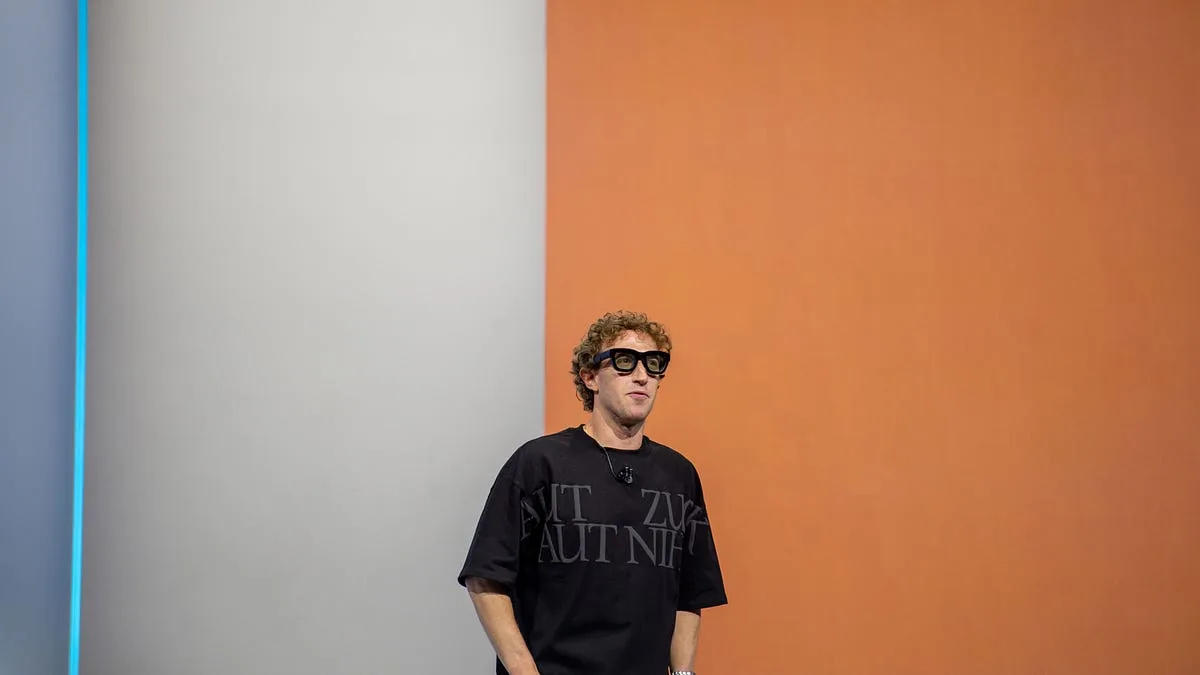
Meta's Llama 3.1 can regurgitate 42% of Harry Potter from memory. That's not intelligence—that's a copyright violation wearing a neural network costume.
Five years after someone called GPT-3 'bigger than Bitcoin,' we've got AI deleting databases in 9 seconds, Meta keylogging employees to train replacements, and Kevin O'Leary building a 9GW server farm in Utah. The hype was real. The outcomes are chaos.