RIP Ask Jeeves: The Original AI Butler Dies at 30
The butler didn't do it. He's just dead.
Ask.com — the search engine formerly known as Ask Jeeves, named after a fictional Victorian manservant who was supposed to fetch you answers like some analog proto-ChatGPT — finally pulled the plug this week after nearly 30 years of fading relevance. The URL now redirects to a static memorial page that loads like a digital tombstone. Somewhere in Silicon Valley, a mid-2000s SEO consultant just felt a disturbance in the force.
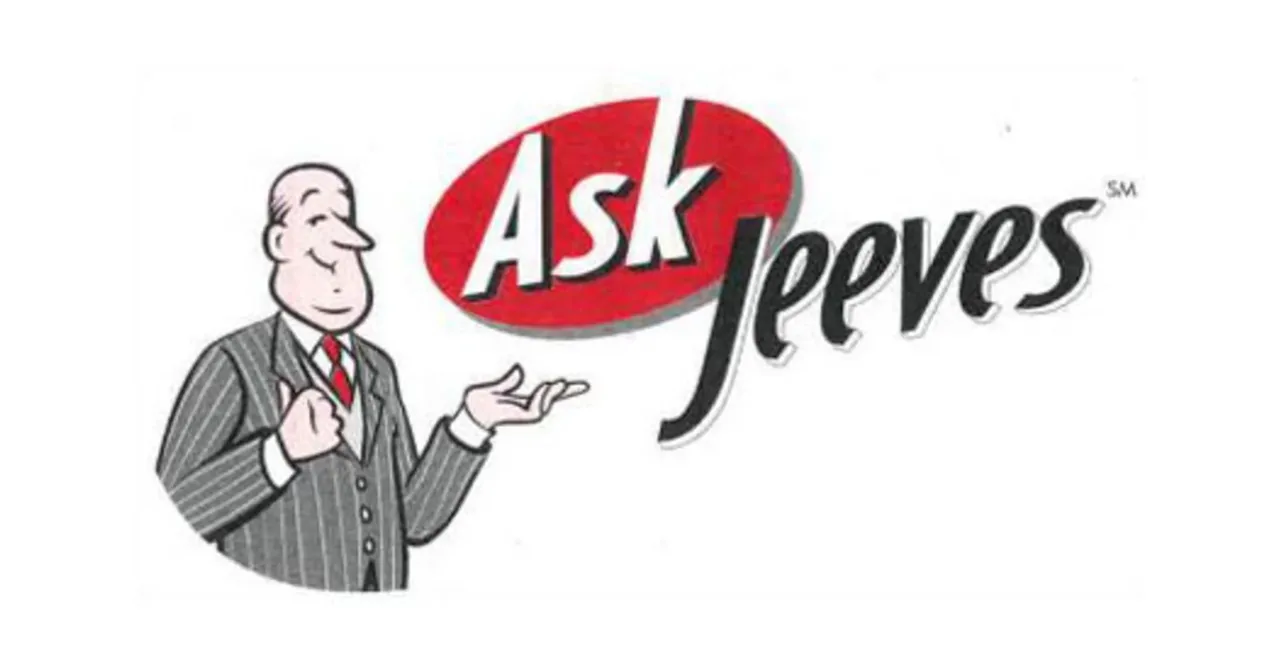
Let's be real: most of you forgot Ask Jeeves existed somewhere around 2008, when Google stopped being a search engine and became a verb. But for a hot minute in the dot-com boom, this was the "natural language" search play. You didn't type keywords. You asked questions. Like a human. To a cartoon butler. In 2026, we call that "prompt engineering" and venture capitalists will pour $2 billion into it.
The Rise: When Questions Were Revolutionary
Ask Jeeves launched in 1997 — one year after Google, in an era when AltaVista was king and Yahoo was actually worth something. The pitch was simple: instead of Boolean search operators and keyword salad, just type "What's the capital of Peru?" and get an actual answer.
Sound familiar?
That's because Perplexity, You.com, and every "AI-powered answer engine" currently burning through Series B funding is selling the exact same premise. The difference is Jeeves had humans manually curating responses for popular queries. Today, Claude and GPT-4o hallucinate them in real-time with 1.8 trillion parameters and $40 billion in compute. Progress.
At its peak in 2005, Ask Jeeves handled about 2% of U.S. search traffic. That sounds pathetic until you realize that's roughly where DuckDuckGo sits today after 16 years and $100M+ in funding. The butler was cooking.
The Fall: Google Ate Everyone's Lunch
The rebrand to "Ask.com" in 2005 killed the butler and the brand in one corporate stroke. Without the charming mascot, it was just another search box — except worse than Google, which by then had become an unstoppable indexing monster crawling 8 billion pages.
IAC (Barry Diller's conglomerate that also owned Match.com and Ticketmaster) tried to pivot Ask into a Q&A platform in 2010, basically cloning Yahoo Answers. That failed. Then they tried algorithmic search again. That failed. Then they tried... nothing. The zombie walked for another 15 years, serving primarily as a toolbar bundled with freeware that no one intentionally installed.
By 2024, Ask.com's global market share had cratered to 0.0004%. Not 0.04%. Not 0.4%. Four ten-thousandths of a percent. More people accidentally typed "ask.com" into their browser than intentionally visited the site.
The Irony: AI Killed the Thing That Predicted AI
Here's the truly savage part: Ask Jeeves' original vision — ask a question, get a direct answer — is now the hottest category in tech.
Perplexity AI, valued at $9 billion as of 2025, is literally Ask Jeeves with LLMs. You type a question. It gives you an answer with citations. The founding premise is identical; only the execution changed.
OpenAI's ChatGPT Search, Google's AI Overviews, Anthropic's Claude with web access — the entire search industry is pivoting to "answer engines" because apparently the future of search is... asking questions and getting answers. Groundbreaking. Someone alert the 1997 patent office.
The difference? Scale, compute, and hallucination. Ask Jeeves gave you curated, human-verified answers to maybe 10,000 common questions. Perplexity synthesizes responses across the entire internet in 3 seconds using models that cost $100M to train. Neither of them can reliably tell you how many r's are in "strawberry," but at least Perplexity looks confident while being wrong.
What Actually Killed Ask: The Toolbar Era Died
The real cause of death wasn't AI or Google. It was the death of browser toolbars.
Ask.com survived for a decade on distribution deals — that little search bar baked into Internet Explorer, the Ask Toolbar bundled with Java updates, the default search hijack in freeware installers. This was the dark-art monetization of the mid-2000s: get your search box in front of eyeballs by any means necessary.
When Chrome killed the toolbar economy and browsers started sandboxing extensions, Ask lost its only real acquisition channel. Without forced distribution, nobody was choosing Ask. Because why would you? Google was faster, better, and didn't come bundled with BonziBuddy.
The Lesson Nobody Will Learn
Startups: your "revolutionary AI-powered natural language search" is not new. It's Ask Jeeves with a GPU fetish. The question was never "can we answer questions?" — it was always "can we answer them better than the incumbent?"
Ask Jeeves couldn't. Perplexity currently can't — it's still losing money on every query while Google serves 8.5 billion searches daily for pennies. The compute cost of AI-powered search is somewhere between 5-10x traditional search, and no amount of venture capital changes unit economics forever.
Nvidia's own execs admitted last week that AI compute costs more than human workers. Let that sink in. The AI revolution is currently more expensive than just paying people to do stuff. Ask Jeeves paid humans to write answers and went bankrupt. Perplexity pays Nvidia to hallucinate answers and is worth $9 billion.
The more things change.
Goodnight, Sweet Butler
Ask Jeeves deserved better. It was a product before its time, suffocated by Google's monopoly and IAC's inability to commit to a strategy for more than 18 months. The butler was charming. The concept was sound. The execution was doomed.
Now it's gone, replaced by a chatbot that will confidently tell you the butler did it, even though the butler is dead, and actually there never was a murder, and also here's a recipe for chocolate chip cookies.
Rest in peace, Jeeves. You were the answer engine we didn't deserve — and apparently, the one we'd reinvent 25 years later with $200 billion in VC funding.
— § —
Got thoughts? Drop them in the comments. No butlers were harmed in the writing of this article. The same cannot be said for Perplexity's burn rate.