This Brain Implant Says F*** Your Eyeballs, Goes Straight to the Source
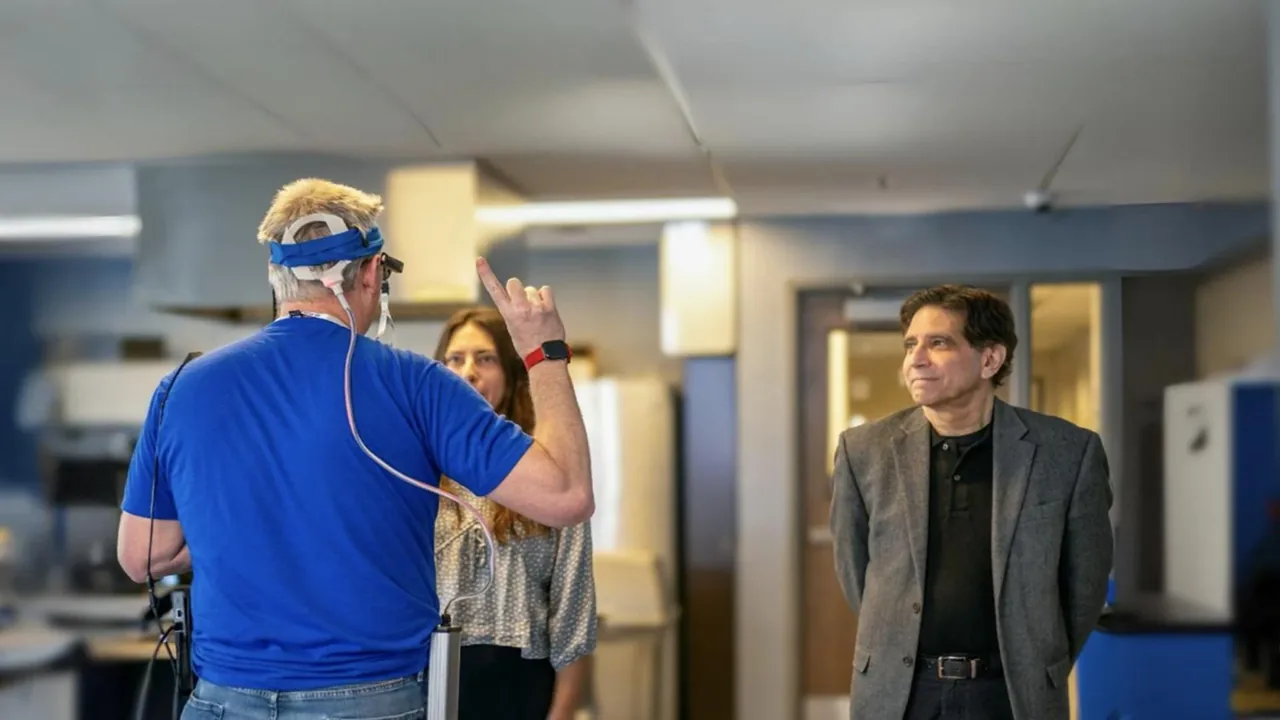
Remember when Neuralink was the scariest thing in brain tech? Sweet summer child. Meet the Intracortical Visual Prosthesis (ICVP)—a brain implant that just said "your retina and optic nerves are optional middleware" and wired directly into the visual cortex of its third blind patient like it was installing a graphics card.
What It Actually Does
Here's the deal: the ICVP doesn't try to fix your eyes. It doesn't send signals through your busted optic nerve like some kind of biological USB-C adapter. Nah—this thing puts microelectrodes directly into your visual cortex (that's the back of your brain where "seeing" actually happens) and stimulates it with electrical pulses to create what patients describe as phosphenes—basically dots of light that your brain interprets as shapes.
Think of it like a really low-res monitor. Like, Atari 2600 low-res. But if you've been seeing absolutely nothing, even a handful of light points is a game-changer.
The tech comes from a collaboration between the Illinois Institute of Technology, the University of Chicago, and a consortium of researchers who apparently looked at the eye-to-brain pipeline and thought, "what if we just... skip all that?"
Why This Matters (And Why It's Not Vaporware)
Here's where it gets real. There are roughly 39 million blind people worldwide. A huge chunk of them have damage to their retinas or optic nerves—which means traditional retinal implants (like Second Sight's Orion, which had its own drama when the company nearly went under and left early patients with unsupported hardware in their heads) were never going to work for them.
The ICVP targets the endpoint: the visual cortex itself. It's agnostic to whatever went wrong upstream. Optic nerve damaged from glaucoma? Doesn't matter. Retina destroyed by retinitis pigmentosa? Not relevant. The implant talks directly to the part of your brain that processes vision.
This is the third successful implantation in their clinical trial, and patients are reportedly able to detect light, identify shapes, and navigate basic obstacles. It's not 4K vision—it's more like playing Pong with your brain—but it's functional.
The Hype Check
Okay, let's pump the brakes before we start calling this "curing blindness." What these patients are getting is artificial vision—crude, low-resolution, phosphene-based perception. We're talking maybe dozens to a couple hundred electrodes when the human eye has roughly 120 million rods and 6 million cones.
The resolution gap is... significant.
But here's the thing that separates this from the usual tech-overpromise carousel (looking at you, every Elon Musk "next year" timeline ever): the research team isn't selling this as a miracle cure. They're honest about the limitations. It's a proof of concept. A foundation. The DOS 1.0 of artificial vision—and we all remember how long it took to get from DOS to Windows 95.
The Bigger Picture: Brain-Computer Interfaces Are Getting Real
The ICVP lands at a moment when brain-computer interfaces are having a genuine inflection point. Neuralink got its first human implant earlier this year, enabling a paralyzed patient to control a cursor with thoughts. Synchron's stentrode goes through blood vessels instead of drilling through your skull. And now ICVP is proving you can bypass entire sensory organs.
We're watching the plumbing of human perception get rewired in real-time.
The implications go beyond blindness. If you can input visual data directly into the cortex, what else can you input? Text? Navigation overlays? The entire internet piped straight into your visual processing? That's straight-up Ghost in the Shell territory, and the foundational tech is being laid right now.
The Cynical Take
Of course, there are questions nobody wants to ask at the champagne-soaked press conferences:
Long-term effects? We're putting electronics into brain tissue. What happens after 10 years? 20? Nobody knows because nobody's had one that long.
Who pays? Advanced prosthetics historically cost six figures. Good luck getting insurance to cover "experimental brain implant" without a fight that makes prior authorization look like a warm hug.
The upgrade problem? Technology moves fast. Your brain implant? Not so much. What happens when ICVP 2.0 comes out and you're still running the original hardware? See the Second Sight disaster for a preview.
Security? If it's receiving wireless signals to generate visual perception, it's theoretically attackable. Someone hacking your vision is a cybersecurity threat that sounds like a Black Mirror pitch but will absolutely be a conference talk by 2028.
Bottom Line
The ICVP is legitimate, meaningful progress. It's not hype—it's science doing what science does: methodically, carefully, and with way less pizzazz than a Vegas keynote but way more actual results.
Third patient in. Phosphenes functioning. The bridge between blind and sighted just got a little shorter.
Just don't expect to throw away your glasses before 2035. This is a marathon, not a sprint. And the finish line keeps moving. But for the first time in a long time, the runners are actually making ground.
Now if you'll excuse me, I need to go lie down and process the fact that we're literally hacking the visual cortex now. The future is here, it's just lower-res than we hoped.