CRISPR Just Went Predator Mode on Cancer Cells
Remember when CRISPR was just about editing genes to make babies see in the dark or whatever those rogue scientists in China were cooking up? Cute era. We're past that now.
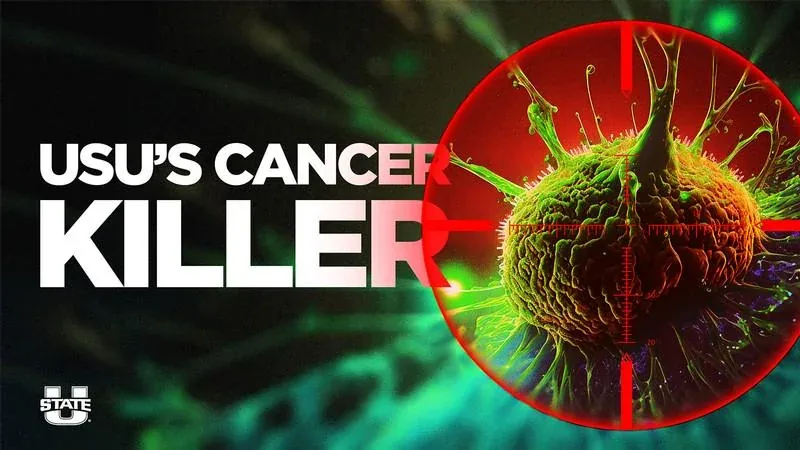
Researchers at Utah State University just published a paper in Nature that should have every oncologist and biotech bro simultaneously losing their minds and reaching for their term sheets. They've demonstrated that CRISPR-Cas12a2 — the less famous cousin of the gene-editing superstar Cas9 — can be programmed to hunt down and selectively obliterate unhealthy cells while leaving healthy tissue completely untouched. In mouse trials, a single treatment cut tumor volume by roughly 50%.
Fifty percent. One shot. Let that marinate.
This isn't some incremental "we slightly improved survivability rates by 2.3% over five years" paper that gets buried in academic journals. This is the molecular biology equivalent of programming a smart missile that only hits the bad guys. Except the missile is a protein complex and the bad guys are cancer cells trying to stage a hostile takeover of your organs.
The Mechanics: Not Your 2018 CRISPR Anymore
Here's where it gets technically spicy. Traditional CRISPR-Cas9 works like molecular scissors — it cuts DNA at specific locations, which is great for editing genes but not ideal for wholesale cell destruction. Cas12a2 is different. When it finds its target RNA sequence, it doesn't just make a precise cut. It goes full Berserker mode, shredding any nucleic acid it can get its molecular hands on. The cell can't survive that level of genomic chaos.
The genius move from the USU team: program the system to activate only when it detects RNA signatures specific to diseased cells. Healthy cells with normal RNA expression? Cas12a2 stays dormant, like a bouncer who only throws out the troublemakers. Unhealthy cells with the wrong RNA profile? The protein complex wakes up and turns the cell into a self-destructing crime scene.
This is, frankly, the kind of selectivity that cancer researchers have been chasing for decades. Chemotherapy has always been the nuclear option — carpet bomb everything and hope the patient's healthy cells are slightly more resilient than the cancer. Targeted therapies have improved the picture, but we're talking about something fundamentally different here: a programmable, self-activating kill switch for diseased cells.
Why This Isn't Just Another Lab Miracle
Look, I've covered enough "breakthrough" announcements to know that 90% of them die somewhere between mouse trials and Phase I clinical trials. The graveyard of promising cancer therapies is vast and overflowing. But there are reasons this particular development hits different.
First, CRISPR as a platform has already proven itself in human medicine. Casgevy, the sickle cell treatment from Vertex Pharmaceuticals and CRISPR Therapeutics, received FDA approval in December 2023 with a price tag of $2.2 million per patient. Yes, you read that right. The infrastructure for CRISPR-based therapies is already being built, regulatory pathways are being established, and — critically — investors have already proven they'll dump billions into anything with the magic four letters.
Second, the delivery problem — the eternal headache of gene therapy — has gotten significantly less terrible. Lipid nanoparticle delivery systems, the same tech that made mRNA COVID vaccines possible, have improved dramatically. Getting Cas12a2 complexes into tumors in 2026 is nothing like the delivery challenges researchers faced even five years ago.
Third, the mouse data is genuinely compelling. Not "statistically significant but clinically meaningless" compelling. Actually cutting tumor volume in half with a single dose compelling. That's the kind of result that gets Fast Track designation from the FDA and venture capitalists sliding into your DMs at 2 AM.
The Biohacking Angle: Where This Gets Weird
Here's where I need everyone to take a deep breath and remember that we live in a world where people will inject themselves with untested gene therapies because some guy on Telegram said it would make them jacked. The DIY biohacking community is going to hear about this research and lose their entire minds.
We've already watched the wellness-to-grift pipeline claim peptides, NAD+ supplements, and exosome therapies. CRISPR was inevitably next. There are already underground clinics in places like Tijuana and various Eastern European locations offering sketchy "CRISPR therapies" for everything from aging to hair loss. The idea that you could program a protein complex to hunt down and destroy specific cells? That's going to be catnip for the longevity crowd who already thinks spending $20,000 a year on supplements will let them live to 150.
Expect to see "Cas12a2-inspired" wellness protocols showing up on optimization podcasts within six months. Expect biohacking influencers with no molecular biology background explaining how they've "hacked" their immune system. Expect the usual suspects to start selling overpriced supplements that supposedly "support your body's natural CRISPR pathways" — a phrase that is scientifically meaningless but will absolutely move units at $89 a bottle.
The Real Timeline: Put Away Your Party Hats
Despite my genuine excitement about this research, let's be brutally honest about timelines. Mouse trials to approved therapy is typically a 10-15 year journey, assuming everything goes perfectly. Which it never does.
The paper just published. We're looking at years of additional preclinical work, then Phase I trials to establish safety (can you even imagine the FDA review process for a therapy whose entire mechanism is "it destroys cells, but like, selectively"?), then larger trials for efficacy.
Realistically, if this technology reaches patients before 2035, it'll be one of the fastest translations in oncology history. And that's if the results hold up in larger animal models, if delivery systems work as well in humans as in mice, and if the selectivity doesn't produce some horrifying off-target effect that we haven't anticipated.
But here's the thing: even knowing all of that, even being professionally skeptical about biotech hype, this research feels different. For the first time, we're not just talking about cutting genes or tweaking expression levels. We're talking about programming molecular machines to recognize disease at the RNA level and eliminate it with extreme prejudice.
That's not incremental progress. That's a paradigm shift with a body count.
The future of cancer treatment might just be a programmable assassin the size of a few nanometers. And for once, the hype might actually be justified. Just don't expect it at your local wellness clinic anytime soon — no matter what that guy on Telegram tells you.
The biohacking revolution is coming. It's just moving at the speed of actual science, not Instagram content cycles.