Solar Desalination That Spits Lithium? Now You Have My Attention
Everyone's losing their minds over AI models that burn through gigawatts and data centers that drink entire aquifers just to hallucinate a six-fingered handshake. Meanwhile, a crew of researchers just dropped a device that does the opposite of everything Silicon Valley stands for — it takes saltwater, hits it with nothing but sunlight, and gives you back fresh drinking water AND battery-grade lithium.
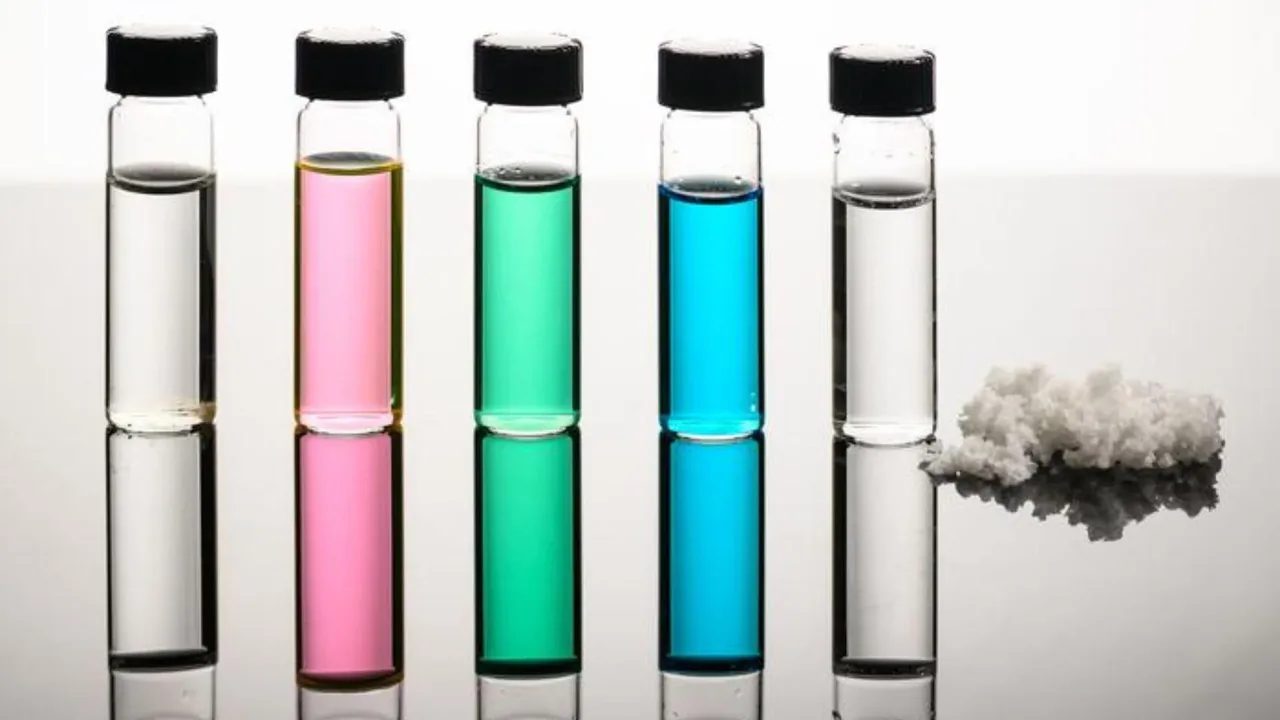
Yeah, you read that right. Fresh water. Lithium. From the same process. Powered by the giant fusion reactor in the sky that doesn't charge API tokens.
The Device That Actually Delivers
Published in Nature Water by a team from King Abdullah University of Science and Technology (KAUST) in Saudi Arabia, this isn't some TED-talk vaporware. It's a solar-driven interfacial evaporation system combined with a crystallization mechanism that pulls lithium out of brine while simultaneously desalinating seawater. Two birds, one photon.
The numbers: the system achieves a solar-to-vapor conversion efficiency of roughly 90% under one sun illumination (that's 1 kW/m² for the uninitiated). It produces freshwater that meets WHO drinking standards. And it recovers lithium chloride from concentrated brine with purity levels that would make battery manufacturers weep tears of joy.
For context, traditional desalination — reverse osmosis, the dominant technology — burns about 3-4 kWh per cubic meter of freshwater. It's energy-hungry, it's expensive, and the brine it spits back into the ocean creates dead zones that make the Great Pacific Garbage Patch look like a zen garden. This solar approach sidesteps that entire grim equation.
Why This Matters Now More Than Ever
Here's where it gets spicy. Remember that Erin Brockovich data center map that went viral? Over 4,200 data centers across the US, each one a thirsty little gremlin. Microsoft's own reports just admitted that using AI is more expensive than hiring humans — and that's before you account for the water these server farms gulp down for cooling. A single large data center can consume 1-5 million gallons of water PER DAY.
Now layer on the lithium problem. Every EV, every phone, every "smart" device that promises to disrupt your life runs on lithium-ion batteries. Global lithium demand is projected to hit 2.4 million metric tons by 2030, up from about 130,000 tons in 2022. Mining it is an environmental nightmare — either you're gouging open-pit mines in the Andes or evaporating brine across Argentina's salt flats for 18-24 months. Both approaches are slow, dirty, and culturally destructive.
This KAUST device compresses that timeline. It recovers lithium from the very waste product of desalination. The brine that normally gets dumped back into the ocean? That's now a revenue stream. You're not just cleaning water — you're mining battery materials as a byproduct.
The Irony Is Thicker Than Brine
The same tech industry that's draining water tables to train GPT-5 on your grandma's shopping lists desperately needs lithium to build the batteries for its electric vehicle moonshots. Tesla's Cybertruck was supposed to be the future of transportation; instead, it's become a stainless steel punchline with delivery numbers that would make a Pop Mart drop look robust.
Meanwhile, Saudi Arabia — not exactly known for progressive environmental policy — is funding research that could genuinely help solve two existential crises simultaneously. The Kingdom's NEOM project, that $500 billion linear city fantasy, has been shopping for legit sustainability tech to justify its existence. This desalination-lithium combo might be one of the few things to actually emerge from that megaproject with real-world utility.
And here's the kicker: this technology is particularly relevant for the Middle East, North Africa, and parts of Asia where freshwater scarcity is an existential threat and desalination is already a way of life. The UAE, Saudi Arabia, and Israel collectively run some of the world's largest desalination plants. Scaling a system that makes those plants more efficient AND generates valuable lithium? That's not just green tech — that's economic self-interest disguised as environmentalism.
But Will It Scale?
This is where the hype-detector starts twitching. Lab results are one thing. Real-world deployment is another entirely.
The researchers tested this on simulated seawater and actual Red Sea samples. The efficiencies are real. But moving from benchtop to industrial scale is where a thousand promising technologies have gone to die. Solar desalination has historically struggled with scaling because you need massive surface areas to capture enough sunlight to process meaningful volumes of water.
That said, the lithium recovery angle changes the economics. Traditional desalination is a cost center — you do it because you need water, not because it makes money. Add lithium recovery, and suddenly you've got a revenue-generating process. Lithium carbonate was trading around $13,000-15,000 per ton in early 2026 (down from the 2022 peak of $80,000, but still significant). Even modest recovery rates could subsidize the entire desalination operation.
The Bigger Picture
While TechCrunch reports that CEOs are suffering from "AI psychosis" and the Wall Street Journal documents a growing American rebellion against the AI industry, here's a technology that represents something different. No hype. No vaporware. No pre-order page with a countdown timer and a $299 early-bird special that ships "Q4 2027 maybe."
Just a clever application of thermodynamics and materials science that addresses two problems simultaneously, powered by the oldest energy source we have.
The Pope just issued an encyclical warning about "opaque algorithms" controlled by a few companies bringing "new forms of dehumanisation." Wozniak told graduates they have "actual intelligence." The public is booing tech executives at graduations and blocking data centers in their communities.
Maybe — just maybe — the answer isn't another chatbot. Maybe it's technologies like this: quiet, functional, and actually useful. Sunlight turns saltwater into drinking water and battery materials. No subscription required. No firmware updates. No terms of service.
Just physics.
The future might not need prompt engineering after all. It might just need better engineering.