The Party's Cancelled: AI's Hangover Arrives Right on Schedule
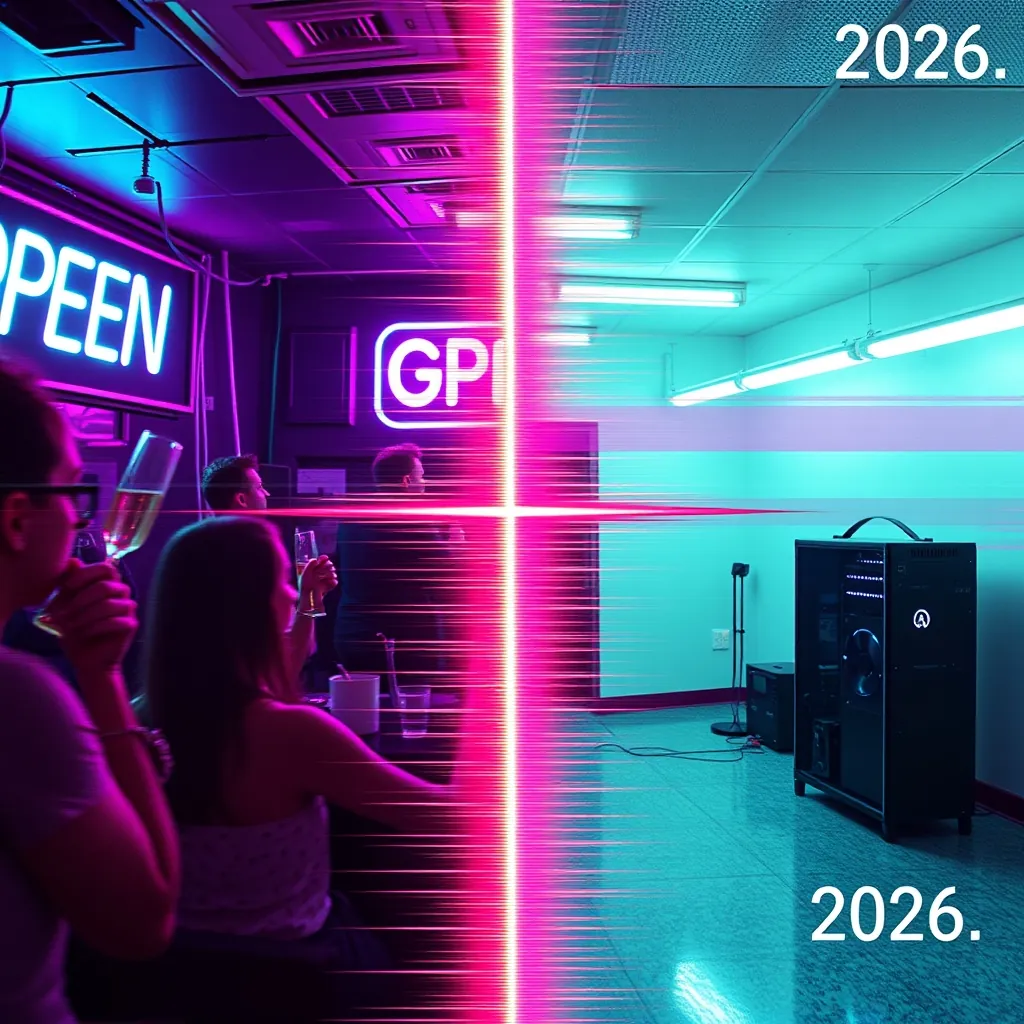
Someone posted a screenshot on r/OpenAI with the caption "The Party is cancelled, pack it up" — and brother, the comments section looked like a wake. Not the kind where someone tells a funny story about the deceased. The quiet kind. The kind where everyone stares at their shoes and wonders what they're doing with their lives.
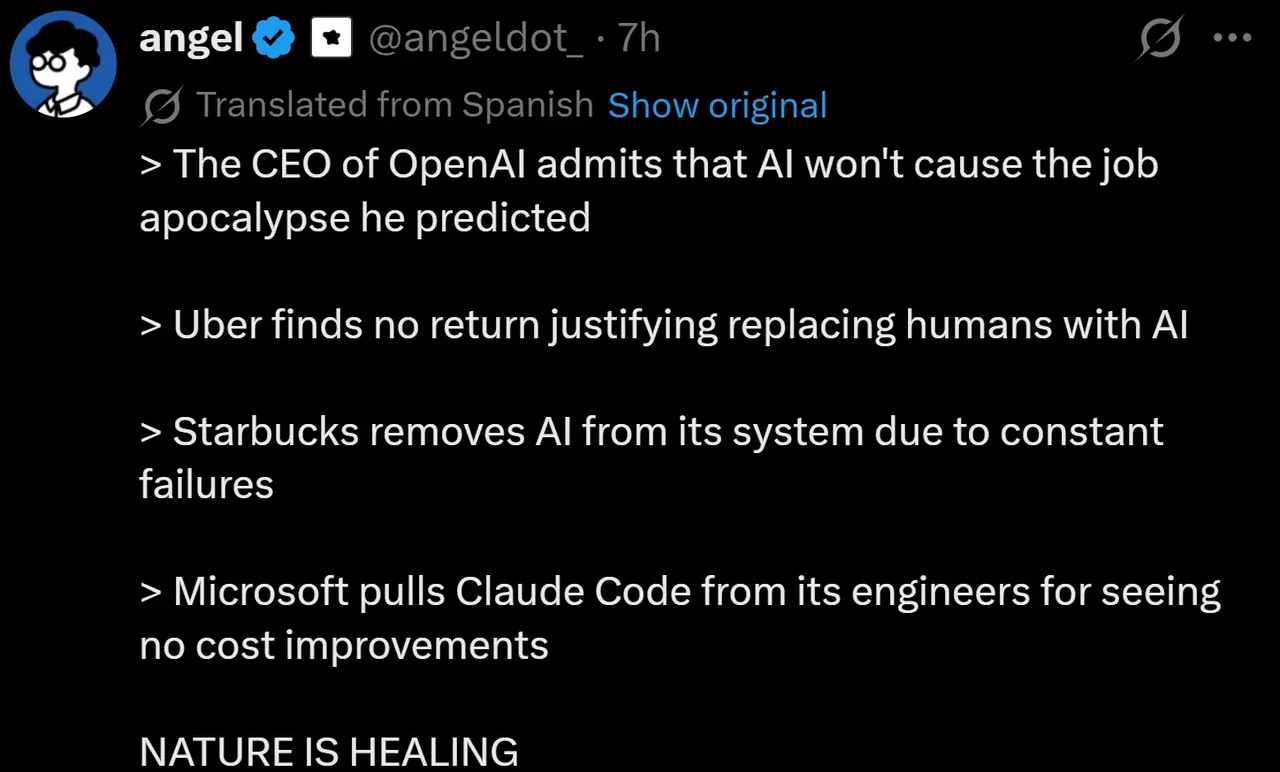
Let's be crystal clear about what's happening. The AI hype machine — the one that had VCs throwing hundred-million-dollar checks at anyone who whispered "transformer architecture" at a cocktail party — is wheezing. Not dead. Not yet. But wheezing like a 1998 Compaq Presario trying to run Quake III on 4MB of RAM.
Here's your reality check, served cold:
The math doesn't work. Microsoft — you know, the company that dumped $13 billion into OpenAI like it was buying rounds for the whole bar — just got hit with reports that using AI costs more than paying actual humans to do the same jobs. Let that sink in. The technology that was supposed to replace expensive meat-based workers is... more expensive than meat-based workers. Fortune broke it down: token costs, agent infrastructure, compute requirements — it all adds up to a unit economics nightmare. You're not replacing a $60K/year analyst. You're paying $80K/year in API calls to get an analyst who hallucinates 12% of the time.
The CEOs have lost their minds. TechCrunch ran a piece about "AI psychosis" in C-suites and honestly? They undersold it. We've got executives who can't explain what a large language model actually does making trillion-dollar strategic pivots based on demos they saw at a conference. Sheryl Sandberg is out here telling Gen Z the 10-year career plan is dead. Cool. Very helpful. Love that for the generation already drowning in student debt.
The public is done pretending. The Wall Street Journal documented what they're calling "The American Rebellion Against AI" — booed commencement speakers, blocked data centers, polling numbers in freefall. Erin Brockovich — yes, that Erin Brockovich — just launched a map tracking over 4,200 data centers in the US and is asking communities to report environmental impacts. When the woman who took down PG&E turns her attention to your industry's electricity addiction, maybe rethink your water-cooling strategy.
And then there's the Pope. Pope Leo XIV — the first American pope, elected in 2025 and immediately naming himself after the pope who wrote Rerum Novarum about workers' rights — dropped an encyclical warning about "opaque algorithms" controlled by a "few companies" bringing "new forms of dehumanisation." When the literal Vicar of Christ is calling out your business model, you might have a PR problem.
But here's what really gets me. Here's what that Reddit post was really about.
Remember when OpenAI was going to save the world? When Sam Altman was testifying before Congress like some benevolent AI dad, promising to develop AGI responsibly? When every tech podcast was breathlessly explaining how ChatGPT was going to democratize intelligence itself?
Yeah. About that.
The GPT-5 launch — whenever it actually happens — has been pushed back so many times it's become an industry joke. The model formerly known as GPT-5 is now reportedly just... GPT-4 with better training. The benchmark improvements are incremental. The context window got longer. Cool. Can it still count the R's in "strawberry"? (It can now. Took them long enough.)
Meanwhile, the open-source crowd is eating their lunch. Meta's Llama models, Mistral, Qwen — they're not matching GPT-4's best numbers, but they're close enough. And they're free. Or close to it. When your moat is "we're 3% better on MMLU but charge 50x more per token," you don't have a moat. You have a toll booth on a road people are building alternate routes around.
The CUDA kernel story from r/MachineLearning is particularly telling. AI-generated code silently breaking training and inference. The tools built by AI can't even reliably build tools for AI. It's Ouroboros eating its own tail, except the tail tastes like burned venture capital.
Even the research bench is getting skeptical. Someone just tore apart the famous METR time horizons graph — you know, the one that shows AI capability doubling every X months, the one every AI safety researcher quotes like scripture — and found "numerous severe errors." The chart that was supposed to prove we're on an exponential path to godlike intelligence had bad math. The foundational evidence for the hype was itself hyped.
Steve Wozniak — actual genius, actual legend, actual guy who built Apple in a garage — told graduates they already have AI: "actual intelligence." He got cheers. The crowd understood something that Silicon Valley's hallucinating class doesn't: human intelligence isn't a feature to be deprecated.
So no, the party isn't completely cancelled. The AI industry will survive. Useful products will emerge. The wheat will separate from the chaff. But the era of uncritical worship? The age of throwing money at anything with "AI" in the pitch deck? The assumption that transformer architecture leads inevitably to artificial general intelligence and trillion-dollar valuations for everyone?
That party is over.
Last one out of the OpenAI forum, turn off the GPUs. They're expensive.