Your Brain Is Already on DMT and Big Pharma Wants In
There's a research proposal floating around ResearchHub right now that should have every wellness grifter, biohacking Instagram coach, and psychedelic startup founder absolutely frothing at the mouth. Neuroscientists want to map "endogenous DMT brain biotypes" — basically figuring out why your skull juice naturally produces one of reality's most powerful psychedelics, and why some of us apparently get more of it than others.
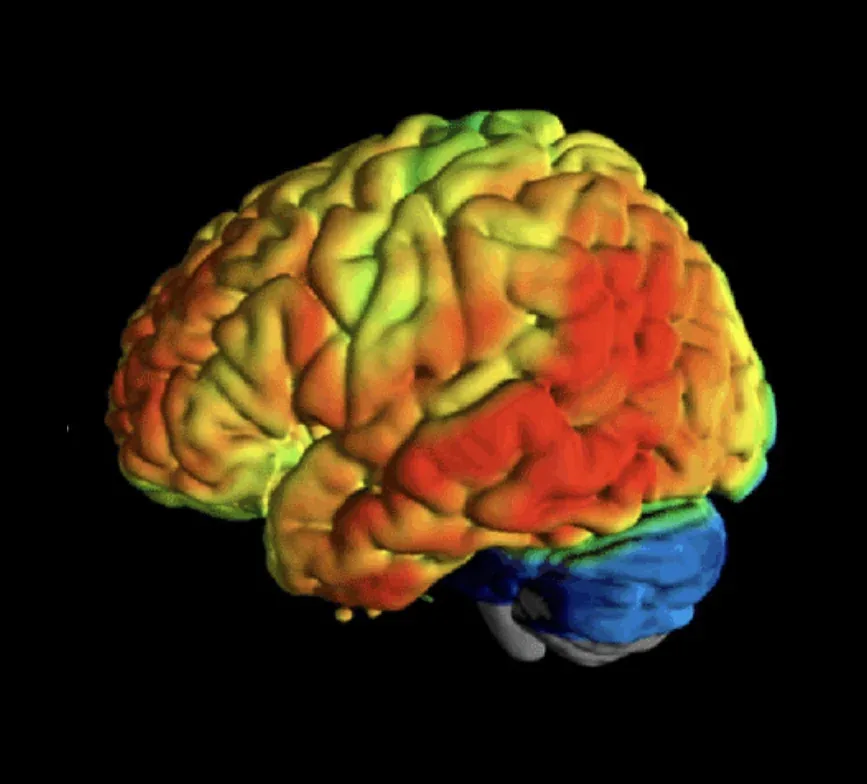
Let's be clear about what we're talking about here. DMT — N,N-dimethyltryptamine — is the compound that makes ayahuasca ceremonies feel like you're being unzipped from the universe and reassembled by geometric mantis beings. It's Schedule I in the US. It's the stuff Joe Rogan won't shut up about. And your brain makes it naturally, all the time, in your pineal gland and elsewhere.
The proposal, titled "Defining Endogenous DMT Brain Biotypes: A Multi-Modal Neuroimaging Study," wants to use advanced brain imaging to categorize people based on their natural DMT production profiles. Think of it like 23andMe, but instead of telling you you're 3% Neanderthal, it tells you why your roommate can see the fabric of reality during a moderate hike while you need three grams of mushrooms just to feel the grass breathing.
This is where the hype machine kicks into overdrive.
The psychonaut-to-grifter pipeline is already well-established. We've watched it happen with CBD ($4.7 billion market in 2023), with functional mushrooms (projected $19.5 billion by 2030), with every supplement that promises to "optimize" your brain chemistry while being sold through Instagram reels featuring a guy in a cold plunge telling you about his morning routine. Endogenous DMT research is the next frontier, and it's going to be weaponized by the wellness industrial complex faster than you can say "neuroplasticity."
Here's the actual science, before the hype distorts it beyond recognition: researchers have known since the 1960s that DMT occurs naturally in mammalian brains. Dr. Rick Strassman's work in the 1990s — popularized in his book The Spirit Molecule — established that the pineal gland produces DMT, and his theory that it's released during near-death experiences and dreams has been part of psychedelic lore ever since. But pinning down exactly how it works, how much varies between individuals, and what that means for consciousness itself? That's still largely unmapped territory.
The ResearchHub proposal wants to change that using multi-modal neuroimaging — think fMRI, PET scans, EEG, the whole neuroimaging arsenal — to create "biotypes" or classifications of brains based on their DMT production. If they can establish that some people are naturally high-DMT producers while others are low-DMT producers, it could explain a LOT. Why some people are prone to mystical experiences and others aren't. Why psychedelic therapy works better for some than others. Why certain psychiatric conditions might be linked to altered endogenous psychedelic levels.
But here's where I put on my cynical hat, because I've been covering hype cycles long enough to know exactly how this plays out.
Remember when everyone discovered cortisol was the "stress hormone" and suddenly every wellness brand was selling cortisol-balancing supplements, cortisol-lowering adaptogen blends, and cortisol detox protocols that were about as scientifically sound as using a crystal to fix your WiFi? Endogenous DMT is going to be that, but on steroids and wrapped in a iridescent holographic package.
I'm already bracing for the startup pitches. "We're building the first endogenous DMT optimization platform." Seed round: $4.5 million. They'll have an app, obviously. Probably a wearable that claims to "stimulate natural DMT production" through some combination of binaural beats and breathwork guidance. The founders will have matching tattoos of a pineal gland. One of them will have been to Burning Man exactly twice but will talk about it like they discovered it.
The biotech angle is actually where this gets interesting and dangerous. If researchers can define these brain biotypes, pharmaceutical companies will want to develop drugs that either enhance or suppress natural DMT production. And that's not necessarily bad — if someone's suffering from a condition linked to endogenous psychedelic dysregulation, targeted treatment could be genuinely transformative. But the gap between "promising neuroimaging research" and "FDA-approved therapeutic that actually works" is roughly the size of the Grand Canyon, and it's filled with the corpses of overhyped neuroscience startups.
Neuralink hasn't cured paralysis yet. Kernel's brain imaging headbands are still niche. Every company that's promised to "hack your brain" has delivered something that's basically a very expensive meditation app with better marketing. The endogenous DMT space will be no different.
What makes this particular hype cycle especially potent is the mystical component. DMT isn't just another neurotransmitter — it's the psychedelic molecule in the popular imagination. The one associated with ego death, entity encounters, and experiences that people describe as "more real than real." When you tell someone their brain naturally produces a compound that might explain the nature of consciousness itself, you're not just selling them a supplement or a diagnostic tool — you're selling them a cosmological narrative about what it means to be human.
And cosmological narratives sell really well.
The proposal itself is legit science that deserves funding. Understanding how endogenous psychedelics shape our conscious experience could genuinely revolutionize psychiatry, neuroscience, and our fundamental understanding of the mind. But the distance between "promising research proposal on ResearchHub" and "overpriced nootropic stack claiming to boost your natural DMT" is measured in days, not years.
So yeah, keep an eye on this one. Not because the science isn't real — it absolutely is, and it's genuinely exciting. But because the wellness industry has never met a brain chemical it couldn't commodify, and DMT is the holy grail of brain chemicals. The grift is coming. It's going to be dressed in sacred geometry patterns and sold through TikTok shops. And by the time the actual research matures, half the population will already be taking supplements that claim to "unlock your brain's natural DMT" while delivering roughly the same effect as a strong cup of coffee and a nice walk.
That's the hype cycle, baby. Round and round we go.