Sound Waves Are Murdering Viruses And It's Beautiful
Remember when the hottest pandemic tech was a UV wand off Amazon that probably gave you more cancer than it killed COVID? Yeah, those were dark times. But hold onto your N95s, because actual scientists just did something that sounds like it was ripped from a cyberpunk novel: they figured out how to literally vibrate viruses to death with ultrasound.
No drugs. No gene editing. No $3,000 boutique IV drip from that wellness clinic in Brentwood. Just sound waves turning influenza A and SARS-CoV-2 into confetti at the molecular level while your cells chill completely unbothered.
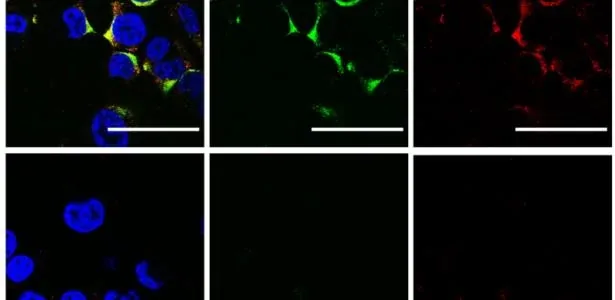
The research, coming out of São Paulo State University (UNESP) with backing from FAPESP, exploits a phenomenon called acoustic resonance — the same physics principle that lets opera singers shatter wine glasses, except scaled down to nanometer-sized viral particles. Hit the right frequency, and the structural integrity of the virus just... gives up.
The Science Isn't New, The Application Is
Here's where it gets real. Acoustic resonance has been understood for centuries. Your microwave uses it. Your car's backup sensor uses it. But applying it to virology? That's the kind of interdisciplinary flex that makes you wonder why nobody tried this before we all spent two years mainlining horse dewormer.
The researchers found specific ultrasound frequencies that cause the viral capsid — basically the protein shell protecting the virus's genetic material — to undergo structural changes until it ruptures and becomes inactivated. Human cells, which have different mechanical properties and structural resonant frequencies, remain untouched. It's like having a demolition crew that only destroys one specific building on a block while everything else stands perfectly fine.
Why This Slaps Harder Than Your Average Hype Cycle
I've covered enough "revolutionary" tech to smell grift from three URLs away. Theranos? Grift. Juicero? Peak grift. Every crypto bro who told you their token was "backed by AI"? Grift squared.
But this? This is actual physics doing actual things to actual viruses with published methodology and reproducible results. The team tested it on both influenza A and SARS-CoV-2 — two viruses with different structures, different replication strategies, different everything — and it worked on both. That suggests the approach isn't a one-trick pony. It's targeting fundamental mechanical properties shared across viral families.
The Biohacking Crowd Is Going To Lose Their Minds
You know who's going to be all over this? The same people who spent $8,000 on a plasma-filled tube that was supposed to "optimize" their mitochondria. The Dave Asprey crowd. The "I inject NAD+ before breakfast" crew. Except this time, they might actually have something.
Imagine a future where your annual flu prevention isn't a shot — it's a 15-minute ultrasound session. Where COVID variants become irrelevant because we're not playing antigen-drift whack-a-mole, we're just physically destroying the particles regardless of what spike proteins they're sporting.
That's the real play here. Viruses mutate. That's their whole thing. But structural mechanics? The resonant frequency of a viral capsid doesn't change because the virus picked up a new mutation. You can't spin up a PR campaign about how your variant is "ultrasound-resistant." Physics doesn't care about your evolutionary adaptations.
The Caveats (Because We're Not Hype Zombies)
Before you start ringing the end-of-pandemics bell, some reality checks:
In vitro ≠ in vivo. Destroying viruses in a petri dish with precision ultrasound equipment is different from doing it inside a living human body. Tissue density, bone, blood flow — everything complicates delivery.
Scaling is the real boss fight. Going from lab results to clinical treatment is where 90% of cool medical tech goes to die. Funding, trials, regulatory approvals — the gauntlet is long and expensive.
Specificity matters enormously. They found frequencies that spare human cells. But the human body contains a lot of different cell types with different mechanical properties. What works on a monolayer in a dish might not work so cleanly in the chaos of actual biology.
We've been here before. Remember when CRISPR was going to cure everything by 2020? Or when mRNA vaccines were supposed to end cancer? Revolutionary tech always takes longer than the hype cycle promises.
Why I'm Actually Bullish Despite My Cynicism
Here's what's different: this isn't a biological hack. It's not trying to trick the immune system or outsmart viral evolution. It's pure physics applied to biology. We understand physics. We're good at physics. We've been engineering acoustic systems for over a century.
The pathway from "we can do this in a lab" to "this is a clinical treatment" is shorter for physical interventions than for biological ones. You don't need to understand viral replication or immune response pathways. You just need to find the resonant frequency and deliver the energy.
Plus, the implications extend way beyond flu and COVID. If this works on enveloped viruses generally — and the early signs suggest it might — we're talking about a potential universal antiviral approach. RSV. Ebola. Whatever nightmare virus emerges from the next zoonotic spillover. The next pandemic might be met not with lockdowns and vaccine races, but with a fleet of ultrasound devices that just delete the problem.
The Bottom Line
In a tech landscape drowning in AI vaporware, crypto implosions, and social platforms designed by algorithms that hate you, it's genuinely refreshing to see something that's both cool and real. No whitepaper. No tokenomics. No pre-sale. Just scientists in Brazil using sound waves to make viruses explode.
Will it actually become a treatment? Who knows. The journey from paper to patient is brutal. But for once, the hype is warranted — and the underlying science is sound.
Pun absolutely intended.
hype404.com — We cover the tech that matters and mock the tech that doesn't. Follow us for more takes that don't suck.